Get Full Government Meeting Transcripts, Videos, & Alerts Forever!
Get email alerts on the Battery Energy Storage topic
No spam. Unsubscribe anytime.
Depew board opens public hearing on draft battery energy storage law
Summary
At its March 9 meeting the Depew Village Board opened a public hearing on a draft law to regulate battery energy storage systems, focusing discussion on safety, monitoring, special-use permits and financial assurances for decommissioning; the hearing will remain open until March 23 for revisions.
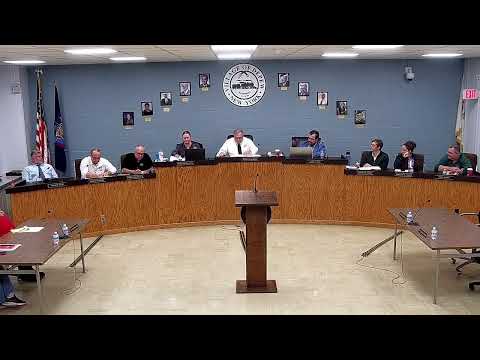
DEPEW, N.Y. — The Depew Village Board opened a public hearing March 9 on a draft local law that would regulate battery energy storage systems (BESS) within village limits and kept the hearing open for further revisions until the board’s March 23 meeting.
The draft ordinance, described to the board as a first-draft and modeled on outside guidance and one municipal example, would classify BESS facilities by size and subject larger commercial systems to special-use permits, setbacks, monitoring and decommissioning guarantees. "This is pretty complicated," Sam said as the board introduced the measure, and staff urged more time to refine technical language before a final vote.
Don, a village code/building official, told trustees that "a battery energy storage system is basically a collection of batteries" that can be charged by solar, generator or other sources and that systems differ by chemistry (for example, lithium-ion versus solid-state). He said larger systems — the draft flags units that can be the size of tractor-trailer modules — require continuous monitoring and fire-safety measures and may pose different risks depending on battery type.
Trustees and staff walked through a set of regulatory options in the draft: tiered thresholds by kilowatt capacity, setbacks from property lines, special-use permitting through the planning board, building-code and NFPA-based fire-suppression requirements, inspection and monitoring protocols, and a financial-assurance mechanism (described in the draft as a letter of credit or similar instrument) to guarantee decommissioning and remediation so taxpayers are not left covering hazardous-material disposal.
Board members and staff emphasized the draft is intended to provide a clear permitting pathway rather than to block the technology. Sam said the intent is to ensure safety and to require that a company installing a large system post financial assurance for removal and cleanup if the owner abandons the site. Don said communities must also define who conducts inspections and how the systems are monitored, noting that grid-connected facilities typically include station-level monitoring that would flag abnormal temperature rises that could indicate thermal runaway.
Trustees clarified that the draft requires a public special-use permit process for large installations rather than allowing automatic siting, and that some permit terms and inspection intervals remain under discussion. The board noted a recent small solar-battery permit had been rescinded after staff determined it had been issued in error while the village adapts rules for larger systems.
Board members also discussed noise and land-use impacts; Don said, "relatively, they're no louder than just us having a conversation," and reiterated that sound and other impacts depend on equipment and enclosure design.
The board provided printed copies of the draft at the meeting and said the law will be posted to the village website. The hearing will remain open and the trustees said staff will return with a revised draft and recommendations at the March 23 meeting.