Get Full Government Meeting Transcripts, Videos, & Alerts Forever!
Get email alerts on the Women Rights International topic
No spam. Unsubscribe anytime.
At UN International Women’s Day commemoration, Malala and UN leaders urge legal accountability and action for girls
Summary
Speakers at the United Nations’ International Women’s Day commemoration called for urgent legal and political action for women and girls worldwide. Malala Yusf Zai urged member states to codify protections for Afghan girls and criticized selective justice; UN Women’s executive director pressed for better‑funded, evidence‑based justice systems.
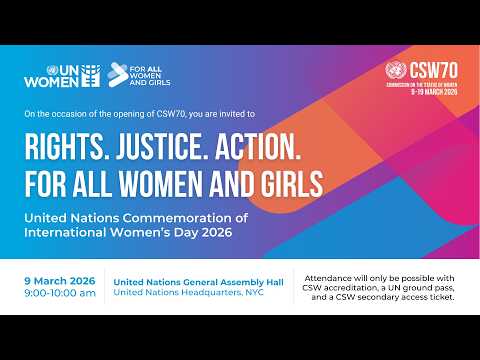
Leaders, activists and artists gathered at United Nations Headquarters on International Women’s Day to press member states for legal accountability and concrete action to make rights for women and girls real.
Malala Yusf Zai, co‑founder and executive chair of the Malala Fund, told delegates she was "heartbroken" by the scale of child suffering in conflict zones and argued that international law already obliges states to act. "Under international law, killing children in their classrooms is a war crime," she said, urging member states to recognize the Taliban’s treatment of women and girls as "gender apartheid" and to codify protections so justice can follow.
The Malala Fund leader, who first addressed the hall 13 years ago, described Afghan girls’ exclusion from secondary school and other public life under Taliban rule and called for laws and accountability rather than speeches alone. "We must move from sympathy to accountability," she said, adding that Afghan women are not asking for military intervention but for recognition in law so justice work can begin.
Sima Bahous, Under‑Secretary‑General and Executive Director of UN Women, said justice must be financed and reformed so survivors can access legal assistance and perpetrators are held accountable. "No country meets its duty of full legal equality for women and girls," Bahous said, calling for evidence‑based justice systems supported by well‑funded women’s organizations.
Celebrities and civil‑society voices framed the political message in personal terms. Actress and UN goodwill ambassador Anne Hathaway urged delegates to celebrate courage while continuing the fight against gender‑based violence and inequality. Singer Michelle Williams performed a song titled "Fearless," and Afghan student‑musician Sambul Raha pleaded directly with delegates to "protect a girl's right to an education," describing how many classmates are denied schooling.
Organizers also presented a video message and an official written statement from UN Secretary‑General António Guterres; an official representative read the Secretary‑General’s remarks to the assembly. Speakers repeatedly linked girls’ education to economic growth and lasting peace, and urged delegates to turn the commemoration’s energy into political will during the 70th session of the Commission on the Status of Women.
The commemoration closed with a call from the session chair, Marissa Chen Valde, for delegates to carry the event’s momentum into actionable decisions during the commission’s work.
The program combined speeches, a musical performance and testimony from those directly affected; delegates were repeatedly urged to convert rhetoric into legal and budgetary reforms that would make justice and educational access a reality for women and girls worldwide.