Get Full Government Meeting Transcripts, Videos, & Alerts Forever!
Get email alerts on the Women Peace And Security topic
No spam. Unsubscribe anytime.
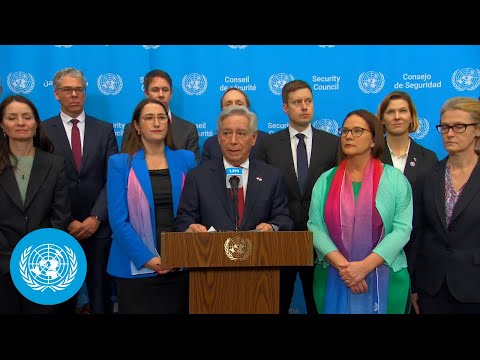
Panama's representative at CSW urges UN action, condemns Taliban's 'systemic discrimination' against Afghan women
Summary
At the opening of the 70th session of the Commission on the Status of Women, Panama's representative condemned the Taliban's new penal code as institutionalizing discrimination, highlighted bans on girls' education and restrictions on female UN staff, and called for immediate reversals and renewal of UNAMA's mandate.
A representative of Panama told delegates at the opening of the 70th session of the Commission on the Status of Women that the international community must act to protect the rights of women and girls in Afghanistan.
"We stand in solidarity with the women and girls of Afghanistan and strongly condemn their continued and systematic repression by the Taliban," the representative said, citing what the statement described as an increasingly critical human rights situation.
The statement singled out a recent Taliban adoption of a nationwide penal code, saying it "institutionalizes systemic discrimination against women and girls," and warned that the code weakens protections against gender-based violence. "Provisions allowing husbands to physically punish their wives and children," the speaker said, may be accompanied by "minimal imprisonment sentences," a combination that the statement said reinforces impunity and undermines access to justice.
The representative also stated that "Afghanistan remains the only country in the world where girls are banned from secondary and higher education, denying millions of girls their fundamental rights." The address linked limits on women's participation in the health workforce to threats to maternal health care and rising preventable mortality.
The statement noted a contraction of civic and media space, saying activists, journalists and civil society actors face "increasing risks of reprisals and detention." It said restrictions imposed by the Taliban on women working for the United Nations and humanitarian organizations "violate Security Council resolution 2681 of 2023 and hinder the delivery of humanitarian aid including medical care to women and girls." The representative urged that "the ban preventing Afghan UN female staff from accessing their workplaces must be lifted immediately."
The speaker welcomed a recent visit to Kabul by Under-Secretary-General Rosemary DiCarlo and cited the special rapporteur's report. The statement commended the Human Rights Council's establishment of an independent mechanism to document violations and noted the work of the International Criminal Court. It called for "measurable progress on women's rights through the UN-led process" and "the full implementation of resolution 2593 of 2021."
As the session opened, the representative reaffirmed support for the United Nations's presence in Afghanistan and urged renewal of the United Nations Assistance Mission in Afghanistan (UNAMA) mandate, saying "the rights of Afghan women and girls, their dignity and full, equal, meaningful and safe participation remain indispensable to peace, stability and prosperity in Afghanistan." The statement concluded by inviting questions from the floor.