Get Full Government Meeting Transcripts, Videos, & Alerts Forever!
Get email alerts on the Budget 2026 27 topic
No spam. Unsubscribe anytime.
Middletown outlines 2026–27 budget assumptions, cites $655,000 digital‑program savings and a $1 million capital timing benefit
Summary
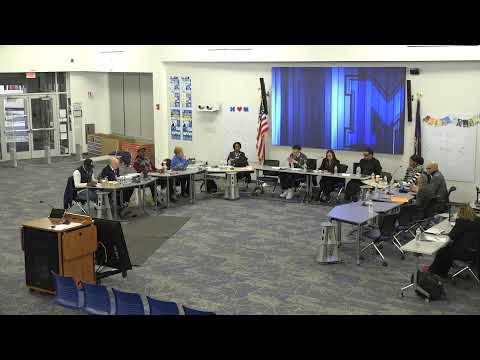
At its March 5 meeting the board heard the first segment of the 2026–27 budget: staff presented administrative, capital and benefits assumptions (CPI ~3%, tax‑cap 2%), noted $655,000 in savings from unused digital subscriptions and a $1 million capital timing benefit, and set a calendar leading to an April adoption and a May 19 public vote.
District business staff presented the administrative, capital and benefits portions of the proposed 2026–27 budget at the March 5 board meeting, explaining assumptions, internal accounting changes and several identified savings.
Key assumptions and projections cited by the presenter included an assumed Consumer Price Index (CPI) of about 3%, an expected statutory tax‑levy cap of 2% for purposes of the district’s planning, and built‑in employer contribution estimates for retirement systems (TRS and ERS). The presenter said the preliminary budget was broken down roughly into 10% administrative, 20% benefits, 12% capital and 58% instructional spending.
On internal controls and savings, staff described the district’s recent adoption of “position controls” to place employees directly in the budget line that will pay their salaries, reducing intra‑budget transfers and journal‑entry adjustments. The presenter said the district audited virtual and digital subscriptions purchased during COVID and identified approximately $655,000 in savings by removing programs with little or no usage.
Staff also said the district front‑loaded some capital purchases this year to take advantage of current available funds, producing about $1 million in budget relief for the coming year while shifting some expenses into the current fiscal year.
Board members discussed employer retirement contribution estimates and state aid uncertainty. One trustee said the Teachers’ Retirement System employer rate guidance referenced in the board packet suggested a potential 8.24% employer contribution; staff noted that figures remain provisional pending the state’s final run of aid numbers.
Important dates and next steps provided at the meeting included further budget discussions in March and early April (instructional and revenue reviews), a tentative board adoption target in late April (after final state aid runs), and the public budget vote on May 19 (the presenter said a simple majority—50% plus one—is required if the increase remains within the 2% tax cap).
A small number of routine financial and personnel memoranda were approved in the same meeting (e.g., financial memorandum 17D items); the board asked staff to provide paper handouts and follow‑up details requested by trustees.
Direct quotes from the presentation: • Dr. Connell (budget presenter): “For this year’s budget, we’re estimating 10% of the budget will be administrative expenses, 20% for benefits, 12% for capital and the bulk — 58% — will be instructional.”
• On subscription savings: the presenter said the audit of digital programs “produced a savings that you see right there, $655,000.”
The board will consider revenue assumptions and instructional program details in upcoming meetings; final spending levels and the tax‑levy proposal will depend on the state’s final aid run.