Get Full Government Meeting Transcripts, Videos, & Alerts Forever!
Get email alerts on the Emergency Management topic
No spam. Unsubscribe anytime.
EMA director urges readiness as city praises church-run warming station
Summary
Talapusa County EMA director Jason Moran told Alexander City leaders the county is increasing emergency coordination and encouraged residents to sign up for the alert system; the council publicly thanked Family Worship Center volunteers who ran a 10-day warming station during the recent cold snap.
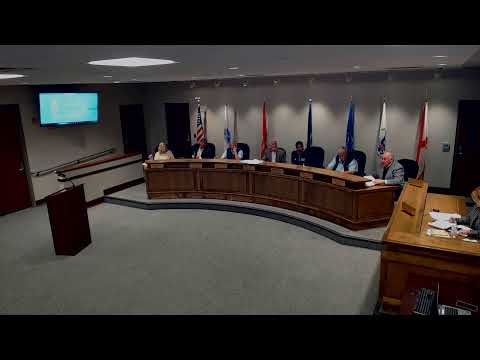
Jason Moran, representing Talapusa County Emergency Management Agency, told the Alexander City Council on Feb. 2 that local relationships are the cornerstone of disaster response and urged the public to enroll in the county alert system.
“We are the coordinating agency for natural, technical, man‑made disasters and now planned events,” Moran said, describing EMA’s role in standing up the emergency operations center, supporting first responders and coordinating state and federal requests. He said the county’s mass-notification system has roughly 18,800 residents signed up out of an estimated population of about 42,500 and encouraged broader enrollment to improve warnings and recovery plans.
The presentation came amid councilwide thanks for a church-run warming station opened during a recent cold snap. Mayor commented that the city asked Tony Harris and Family Worship Center to host a warming site and that volunteers kept the site open for about 10 days to shelter people during extreme weather.
“We was there with these homeless people,” Tony Harris told the council, describing the on‑site care volunteers provided and the partnership with police and fire to check on clients and safety. Blaine Stewart, Teresa Stewart and Lois Ringo were introduced as the volunteers who led the effort and asked the city to consider a formal partnership for future emergency sheltering.
Moran described EMA’s routine work: connecting law enforcement, fire, EMS, nonprofits and neighboring jurisdictions; supporting damage assessments for FEMA reimbursement; and maintaining the county’s all‑hazards mitigation plan, which he said is currently with FEMA for approval and will be returned to council for formal adoption.
He outlined the agency’s priorities for incident response — life safety, incident stabilization and property preservation — and highlighted exercise planning, volunteer reception center operations and communications protocols. Moran also noted EMA can deploy a mobile command center and that public information officers are critical to a unified message during incidents.
The council and mayor thanked Moran and the church volunteers. The council did not take formal policy action during the presentation; Moran said the FEMA mitigation plan will return for a future formal adoption vote.