Get Full Government Meeting Transcripts, Videos, & Alerts Forever!
Get email alerts on the China Coercion topic
No spam. Unsubscribe anytime.
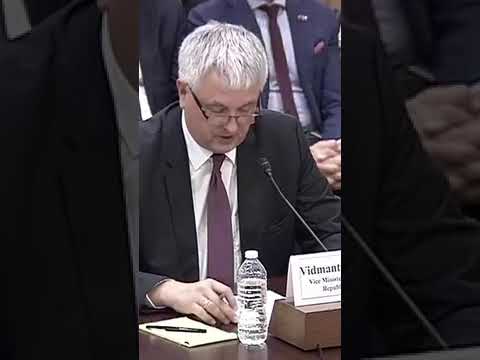
Presenter says China used economic and diplomatic coercion against Lithuania after 2021 Taiwan decision
Summary
A presenter described how Lithuania’s 2021 withdrawal from the China-led 17+1 and permission for a Taiwanese representative office in Vilnius prompted what the speaker called economic and diplomatic coercion by China, including trade blocks and a near-total collapse of Lithuanian exports to China.
A presenter described how China imposed coordinated economic and diplomatic pressure on Lithuania after Vilnius permitted a Taiwanese representative office and Lithuania withdrew from the China-led "17 plus1" format in 2021, saying bilateral trade was targeted and exports fell "by 99.7% — essentially to zero."
The presenter framed the remarks with Lithuania’s recent history: "When we restored our independence in 1990, the Soviet Union responded with a full economic blockade," the speaker said, arguing that dependence creates vulnerabilities and that economic policy must protect democratic choices.
The speaker said Lithuania has since worked to reduce strategic dependencies by building LNG infrastructure, diversifying energy supplies and synchronizing its grid with continental Europe. "Today 70% of our energy supplies comes from the United States," the presenter said, using energy diversification as an example of national resilience.
Describing the 2021 policy shift, the presenter said Lithuania "withdrew from China's lead 17 plus1 format" and allowed the establishment of a Taiwanese representative office in Vilnius. "In response, China imposed unprecedented economic and diplomatic coercion," the presenter said. The alleged economic measures included removal of Lithuanian-origin goods from Chinese customs systems, delays or denials of export permits, and nonrenewal of contracts.
On the immediate impact, the presenter said Lithuania-origin exports to China fell "by 99.7% — essentially to zero," characterizing the actions as politically motivated pressure intended to change a sovereign policy decision rather than a commercial dispute.
The presenter also described diplomatic escalation: "It unilaterally downgraded diplomatic relations without Lithuania's consent, creating a false appearance of mutual agreement. Our embassy staff were forced to surrender accreditation and leave Beijing. Lithuania does not recognize this downgrade and we maintain our embassy."
Consular access to detained Lithuanian nationals in China was described as "severely restricted," which the speaker said raises humanitarian and legal concerns. The presenter concluded by saying Lithuania's case "illustrates a broader pattern" of economic and diplomatic coercion used against democratic states whose sovereign decisions do not align with Beijing's preferences.
The remarks consisted of a single speaker’s account and did not record responses from Chinese officials or independent third-party verification of the trade and diplomatic actions described.