Get Full Government Meeting Transcripts, Videos, & Alerts Forever!
Get email alerts on the International Security topic
No spam. Unsubscribe anytime.
Witness says China aligns with Russia on gray-zone tactics and promotes an "autocratic advantage" message
Summary
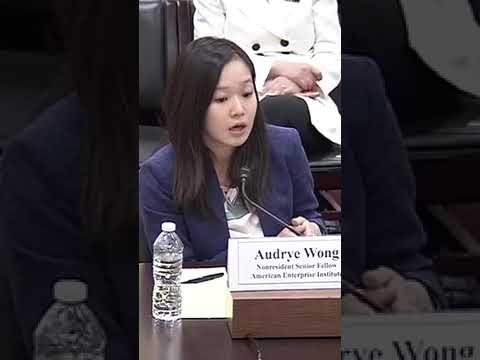
At a hearing, Representative Elzey asked whether China and Russia directly collaborate on gray-zone attacks. A witness answered that the two show a high degree of alignment in interests and that Chinese state media pushes an "autocratic advantage" narrative that can erode support for democracy.
Representative Elzey asked whether China and Russia are directly collaborating on so-called gray-zone attacks — from subsea cable cutting to information-manipulation campaigns and airspace incursions, and whether they coordinate or merely copy each other.
The witness answering the question said, "I think we certainly see a high degree of alignment in Chinese and Russian interests." The witness added that, while the two powers sometimes disagree and are wary of one another, they generally share an interest in "destabilization and weakening of democratic free and open societies," explicitly citing the United States and the European Union.
The witness said that many of the tactics Representative Elzey listed are part of synchronized strategic narratives. "We see a lot of synchronization, especially in the strategic narratives that they're using on the on Russia's invasion of Ukraine," the witness said, and that China often amplifies disinformation that Russian state media has propagated.
Beyond amplification, the witness said Chinese state media is actively promoting what the witness called "autocratic advantage," a message that highlights perceived performance benefits of authoritarian governance. "Chinese state media is actively sort of trying to push the message of what I call autocratic advantage," the witness said.
Citing their own research, the witness said that this messaging can affect foreign publics' views of democracy and reduce support for democratic systems. "I found that that actually has significant impacts on how public foreign publics globally think about democracy and the degree of support for democracy," they said.
The witness concluded that the intersection of synchronized Russian and Chinese narratives and China's promotion of autocratic governance can "fundamentally undermining... support for democracy and accelerating democratic backsliding."