Get Full Government Meeting Transcripts, Videos, & Alerts Forever!
Get email alerts on the Foreign Policy topic
No spam. Unsubscribe anytime.
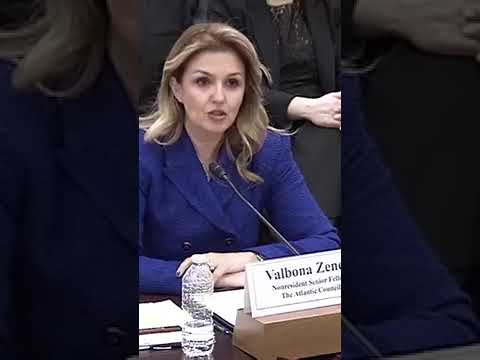
Presenter warns Europe's fragmented China policy leaves EU vulnerable to Beijing's strategic leverage
Summary
A presenter told listeners that while the European Union has recalibrated its China policy, disagreement among 27 member states prevents unified action, leaving Europe exposed to Beijing's strategic use of state‑backed financing, subsidies and political engagement to gain influence in critical sectors.
A presenter warned that although the European Union has "made significant progress in recalibrating the approach to the People's Republic of China," divergent interests among its 27 member states and institutional complexity prevent a single, unified strategy, leaving Europe exposed to strategic economic leverage from Beijing, the presenter said.
The presenter said this is not merely commercial engagement but a strategic push: "China has expanded its economic footprint across Europe with a clear strategic purpose to acquire advanced technologies, shape global value chains," he said, arguing Beijing aims to build dependency in key sectors. The presenter pointed to a mix of "state‑backed financing, industrial subsidies, and political engagement" as tools Beijing uses to deepen its presence.
Why it matters: the presenter framed the issue as one of economic security. He argued that structural shifts over two decades have increased European vulnerability: "China's share of the global economy is around 20% ... while the European Union has fallen to 14%," and trade has become more imbalanced, with China supplying "over one‑fifth of EU imports and a trade deficit exceeding ... $400 billion," the presenter said. That imbalance, he warned, heightens exposure to risks in critical inputs and supply chains.
The presenter also described how Beijing tailors its approach regionally, pushing advanced manufacturing ties in Western Europe, infrastructure and energy investments in Southern Europe, and political‑economic engagement in Central and Eastern Europe and the Western Balkans through platforms like "14 plus one" and the Belt and Road Initiative. He singled out vulnerabilities in areas such as rare earths and other critical inputs, where export controls or overcapacity can create supply shocks.
The discussion was framed as an analytical diagnosis rather than a policy prescription: the presenter stressed the need to recognize that Europe's policy is the outcome of negotiation among member states with differing economic pressures and security concerns, which makes consistent collective action difficult. The presenter concluded by describing the cumulative effect as a "China shock" that has structural implications for Europe's economic security.
The transcript does not record a formal vote or a proposed motion; the remarks served as an extended policy assessment.