Get Full Government Meeting Transcripts, Videos, & Alerts Forever!
Get email alerts on the Infrastructure topic
No spam. Unsubscribe anytime.
Belmont staff outline legal steps for a sewer-capacity development moratorium
Summary
City staff advised the council that under N.C. Gen. Stat. §160D-107 (and notice rules in §160D-601) the city could adopt a temporary moratorium in areas affected by sewer capacity shortfalls. Staff recommended drafting an ordinance with a problem statement, scope, timeline and actions and indicated August–September as a realistic target for a public hearing.
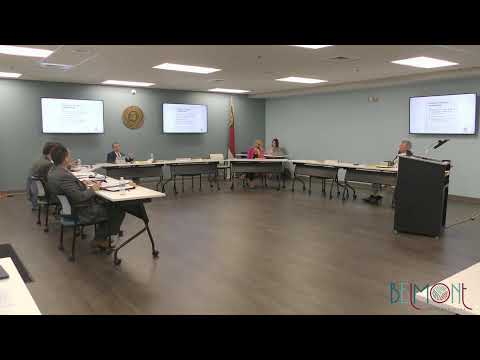
Belmont city staff briefed the City Council on July 1 about the legal framework and practical steps needed to adopt a temporary development moratorium tied to sewer-treatment or pump-station capacity constraints.
Staff cited North Carolina General Statutes as the enabling authority and said a defensible moratorium ordinance must include: a clear problem statement (for example, insufficient treatment capacity), an explanation of alternatives considered, a reasonable initial duration (jurisdictions have successfully defended periods of up to two years), and a statement of actions the city will take during the moratorium (such as hiring design engineers and completing infrastructure design).
The presentation noted that certain projects are exempt if they hold vested rights or were already in the permitting cycle (for example, valid building permits, recorded final plats or approved special-use permits). Staff said the geographic scope of the moratorium should align with the sewer infrastructure that feeds the affected pump station (the Morgan Branch pump station was discussed as an example) and that engineering work will be required to map the precise boundary.
Councilmembers asked how quickly the city could act. Staff said drafting an ordinance and meeting statutory advertising requirements would likely make an August or September public hearing realistic; the full mitigation work (engineer selection, design and bidding) could take many months to years and staff suggested an initial two-year moratorium window while upgrades proceed, with the possibility of extension if needed and justified.
Why it matters: A moratorium would temporarily pause new development in the affected service area to prevent growth that the wastewater system cannot support. That pause would protect public infrastructure and health, but also affects developers and landowners planning projects in the boundary area.
What happens next: Staff will prepare a draft ordinance for council review that specifies the problem statement, boundaries, timeline and the actions the city will take during the moratorium. Council directed staff to proceed expeditiously while ensuring statutory requirements are met.