Get Full Government Meeting Transcripts, Videos, & Alerts Forever!
Get email alerts on the District Budget And Finance topic
No spam. Unsubscribe anytime.
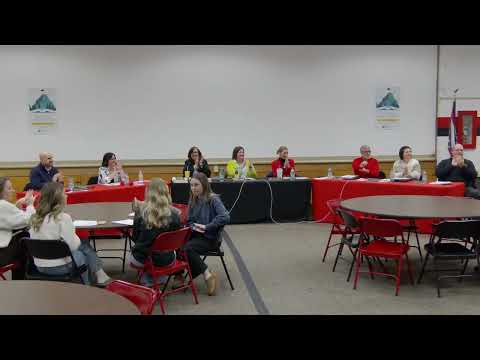
Treasurer warns New Philly City Schools face multimillion-dollar shortfall after state tax changes
Summary
The district treasurer told the board that recent state property-tax bills and a 2025 reappraisal will reduce New Philadelphia City Schools’ revenue, producing a projected $6.3 million swing over five years and a $9 million deficit by year five unless the district secures new levies or construction.
The New Philadelphia City Schools treasurer told the school board that a series of recent state law changes to property-tax calculations will sharply reduce local revenue and state aid, producing a projected $6.3 million change in revenue over the next five years and a $9 million deficit at the end of that period.
At a detailed presentation to the board, treasurer Julie Irwin explained how school millage is calculated (market value × 35% assessment; one mill equals $1 per $1,000 of assessed value) and how House Bill 920, House Bill 129, House Bill 335 and related measures change those mechanics. "The financial impact is our change in revenue over the five‑year forecast is $6.3 million," Irwin said during the presentation, attributing $4.1 million of that loss directly to property-tax reform.
Irwin walked the board through the bills’ effects: HB 129 folded fixed‑sum (formerly called emergency) levies into the 20‑mill floor calculation, which can push districts off the growth‑producing floor; HB 335 applies a GDP deflator to inside mills beginning at the next triennial update; and HB 186 applies similar inflation caps to outside mills. She said those state changes, combined with the county’s 2025 reappraisal (which raised average home values 24%), mean the district’s effective mills will decline and growth in local tax revenue will be constrained unless the district wins new levies or benefits from new construction.
The forecast presented to the board showed declining state aid (Irwin said the state is effectively paying based on frozen base costs and a GDP deflator), shrinking per‑pupil state shares and worsening cash balances. "As of fiscal year 2027 we are deficit spending," Irwin said. She warned that projected cash reserves could fall to about six days of operating cash in 2028 and that ongoing payroll and benefit costs and unsettled negotiations add pressure to the district’s finances.
The treasurer also highlighted levy timing and exposure: the district has two fixed‑sum levies (identified in the presentation as $3 million each) that expire in December 2027 and in 2034. She said a renewal attempt will be the district’s primary near‑term option to preserve funding and noted the last time the district obtained new operating money it passed by a slim margin.
Following the presentation, the board voted to approve the five‑year forecast as presented. The board also approved a package of routine fiscal items discussed in the meeting packet, including a 48‑month equipment lease, bus camera and antenna invoices (one bus camera invoice is offset by a grant), a cyber‑security statement of work ($29,300), HVAC maintenance ($15,730), a band trailer purchase ($49,603), and two school buses purchased through an EPC school bus program ($140,129). All motions passed by roll call.
Why it matters: The presentation links state legislative changes to near‑term operational risk for the district. If projected revenue losses materialize and the district fails to secure replacement funding via levies or growth, administrators said they will need to consider personnel and program adjustments to remain solvent.
Board next steps and context: The treasurer recommended pursuing renewal of at least one fixed‑sum levy on the November ballot (with a final renewal opportunity noted as November 2027 in the presentation). The administration will continue to refine the forecast, engage with legal and advocacy partners, and explore cost‑control options. The board approved the forecast and several procurement items at the meeting.