Get Full Government Meeting Transcripts, Videos, & Alerts Forever!
Get email alerts on the Education Budget topic
No spam. Unsubscribe anytime.
District recommends about 95 certified reductions as board debates $12.4M projected deficit and alternatives
Summary
Administration recommended roughly 95 certified position reductions (including seven administrative posts) to align staffing with enrollment and address a projected $12.4 million deficit. Board members discussed alternatives, historical budgeting decisions and steps to prioritize attrition, grants and discretionary cuts; no final vote tonight.
Superintendent Bridges presented the administration's staffing-projection recommendation for 2026-27, proposing an approximate certified reduction of 95 positions districtwide (including seven administrative positions) to align workforce levels with current enrollment and fiscal realities. Administration said the recommended licensed staffing level would be about 1,477 FTE for 2026-27, a net reduction of roughly 90 FTE from current levels.
Bridges and staff emphasized the district will prioritize retirements, resignations, natural attrition, internal transfers and certification alignment before involuntary layoffs. "We will continue to move through this process with transparency, professionalism, and respect for the people who serve our students," Bridges said.
Board members pressed administration on alternatives and context. Holly Blastic and others asked what departmental and discretionary cuts had already been pursued; administration said about $4 million in reductions had been identified so far via streamlining discretionary spending, maximizing grant and Medicaid reimbursements, and reducing travel, conferences and department-level expenses.
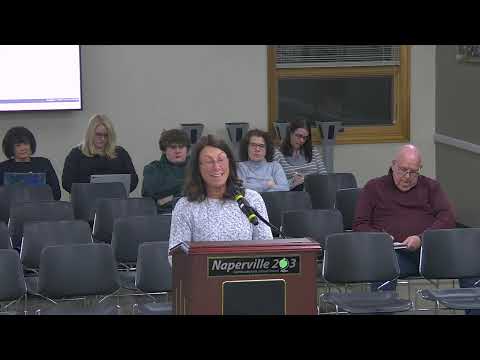
In public comment earlier, Kelly Scotty, a Naperville resident and District 203 instructional assistant, urged allocation of staff by school need rather than by roster and cited school-level data (class counts, IEPs, ELLs and MAP test gains) to argue smaller class sizes and targeted assistants produce measurable growth.
Board member Melissa Kelly-Black delivered a long critique of prior budget choices, saying: "This is not an accident. This is a result of decisions," and arguing district leaders had normalized deficits and continued capital initiatives while operating funds eroded. Joe Kosminski and administration countered that many recent deficits reflected one-time capital expenditures approved under Board policy 420 and funded from fund balance, not ongoing operating overspending; finance staff pointed to ISBE financial-profile metrics that still show a historically strong rating but noted FY26 may show the first operational deficit.
Board members discussed tools to reduce staffing impacts, including voluntary separation incentives (MOA with unions), targeted use of attrition, and delaying nonessential spending. Administration said formal board action on staffing will be scheduled for the March 16 meeting; no personnel actions were taken tonight.
The board reiterated its intent to protect instructional quality while addressing fiscal sustainability and asked administration to continue identifying alternatives and reporting progress.