Get Full Government Meeting Transcripts, Videos, & Alerts Forever!
Get email alerts on the Affordable Housing topic
No spam. Unsubscribe anytime.
Gaithersburg staff propose broad rewrite of affordable housing regulations, expand eligibility and tighten procedures
Summary
City staff proposed a reorganization and substantive changes to Gaithersburg's affordable housing regulations (Reg. 03-9), including expanded eligibility regardless of residence, mandatory lotteries, revised pricing and control-period changes; council and public raised questions on priority categories, amenity fees and senior housing rules.
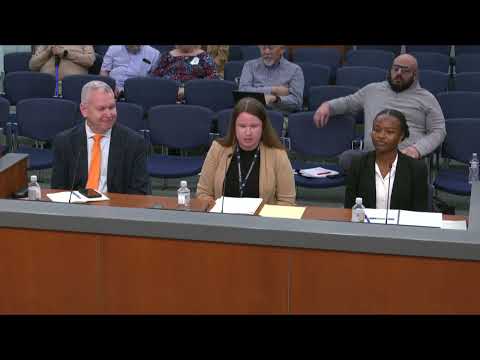
Gaithersburg City staff presented proposed revisions to the city's affordable housing regulations at a March 9, 2026 work session, recommending structural and substantive changes intended to reduce legal risk, increase clarity and expand access.
For the record, Morin Walker, division manager for housing and community development, said the city's regulations require that "new developments with 20 or more rental or for sale units must set aside at least 15% as affordable." Walker told the council the rewrite collapses duplicated language, cross-references definitions in the zoning code and replaces passive phrasing with active requirements to make responsibilities and enforcement clearer.
Why it matters: Staff said the changes are designed to make the regulations easier for residents, developers and staff to use and to avoid conflicts with the zoning code. The proposal includes several items with direct impacts on who can apply for affordable units, how prices are set and how long affordability lasts.
Key proposals
- Eligibility and priorities: Staff proposed opening program eligibility to any income-eligible applicant, regardless of where they live or work, while retaining priority status for applicants who live or work in Gaithersburg and meet specified priority categories (city employees, first responders, MCPS employees, employees of private K–12 institutions in Montgomery County, and current service members or veterans). Walker said priority still requires having lived or worked in the city for at least one year.
- Citizenship and first-time buyer definition: Staff recommended removing a citizenship requirement for for-sale applicants (rental units already lack such a requirement) and changing the definition of a "first-time homebuyer" from five years to three years so applicants can access Maryland's mortgage programs and the city's down-payment assistance (0% deferred loans up to $40,000).
- Pricing and occupancy multipliers: To simplify pricing, staff proposed using AMI adjusted for household size to determine initial MPDU sales prices (targeting 65% AMI for MPDUs) and correcting multipliers to the standard 1.5 persons per bedroom; they also proposed adding a 0.5-person adjustment for a den.
- Control periods and resale sharing: For for-sale units, staff proposed that the control period reset on each sale and that owners share a portion of resale profits with the city's affordable housing fund; rental affordability rules for newer developments generally remain tied to the life of the property.
- Lotteries and application process: To ensure equitable access, staff proposed mandatory lotteries for all new for-sale and rental developments with two lottery runs (first for priority applicants, then for general applicants). Staff also proposed a preliminary screening tool to reduce front-end workload in the rental application process.
- Fees, waivers and covenants: Staff recommended eliminating a mandated non-refundable amenity fee for MPDU rental tenants, expanding waiver procedures (city manager review, council referral, and appeal to the board of appeals under §24-12.9), allowing limited waivers for under-occupancy in specific circumstances, and requiring restricted covenants be recorded before issuance of building permits.
Staff data and rationale
Walker reported vacancy data from nine responding properties: a 5.4% vacancy rate for MPDUs and an 18.5% vacancy rate for workforce units, and noted that vacancies mean eligible households may not be accessing available units under current rules. To reduce administrative duplication and legal conflicts staff said they removed repeated definitions and cross-referenced the zoning code instead.
Council and public reaction
Councilmembers thanked staff for the rewrite and raised questions on several items. Councilmember Jim asked whether removing the amenity fee for rentals could create unintended downstream costs; staff clarified the amenity fee is a separate rental charge rather than a condominium fee and said refundable fees could remain. Councilmembers debated the control-period approach (reset-on-sale vs perpetual affordability for new developments) and requested clearer operational language for lotteries (staff indicated mandatory lotteries in the first 45 days then first-come, first-served afterward).
On senior housing, staff asked whether the age minimum for "housing for the elderly" (currently 62 in the zoning code) should be lowered toward 60 or 55 to match some senior-housing practices and whether funds received from family or friends for medical care should be excluded when calculating household income for senior living. Councilmembers and residents generally favored excluding medical-support payments from income calculations and expressed interest in lowering the age threshold for eligibility in some contexts but asked staff to return with legal and practical implications.
Public commenters — including residents and a former councilmember — generally supported the staff recommendations to expand eligibility while maintaining priority for local workers and residents, and asked that the council monitor vacancy and utilization data after the regulations change. One public speaker asked staff to consider including "good cause" eviction protections in deed covenants for parity with LIHTC practices.
What happens next
Staff said they will bring ordinance language and implementation details back to council for further direction. The council did not take a substantive vote on regulatory changes at the session; staff requested council feedback and signaled further legal and operational refinement prior to introduction.
Sources and attribution
Quotes and factual attributions in this report come from the March 9, 2026 Gaithersburg work session presentation and subsequent council question-and-answer, as recorded in the meeting transcript. Direct speaker attributions are used only where those names or roles were stated on the record.