Get Full Government Meeting Transcripts, Videos, & Alerts Forever!
Get email alerts on the Consular Services topic
No spam. Unsubscribe anytime.
Irish consulate deputy visits Orland Park to explain citizenship, consular services and economic ties
Summary
Podrick Manning, deputy head of mission at the Consulate General of Ireland in Chicago, told an Orland Park audience the consulate handles passports, citizenship and visa services, supports study-abroad and working-holiday programs, and funds community cultural grants; he said Foreign Births Register processing averages about nine months.
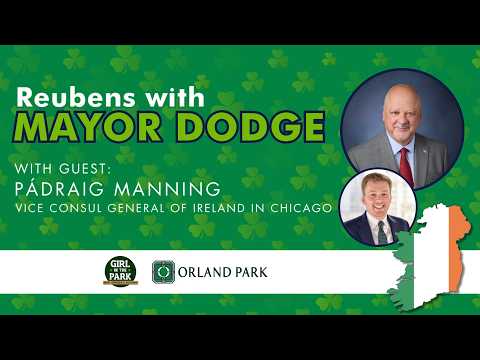
Podrick Manning, deputy head of mission at the Consulate General of Ireland in Chicago, visited an Orland Park community event to outline the consulate’s work and answer residents’ questions about Irish citizenship, passports and cultural ties.
Manning said the consulate—one of nine Irish government offices covering the U.S. Midwest—prioritizes citizen services such as passports, citizenship applications and visa assistance, and also works to strengthen political and economic links between Ireland and the United States. “We are here to support Irish citizens,” Manning said, adding that the office also promotes Irish culture and partners with organizations such as Gaelic Park.
In a question-and-answer session, Manning explained eligibility for Irish citizenship: a parent or grandparent born on the island of Ireland generally establishes entitlement, but applicants who claim by a grandparent must register on the Foreign Births Register and supply documentary proof (for example, a grandparent’s birth certificate and parents’ marriage records). “If you have a grandparent born anywhere on the island of Ireland, then you are entitled for Irish citizenship,” he said.
Manning said great-grandparents do not confer a right to citizenship through the foreign-birth registration process and noted that U.S. citizens may still visit Ireland visa-free for up to 90 days. He also described practical benefits of an Irish passport for travel and residency in Europe, saying membership in the European Union can make travel more seamless for passport holders.
On processing times, Manning said the government has moved many services online and that the average processing time for Foreign Births Register submissions is “around 9 months,” advising applicants who exceed that period to contact the consulate for follow-up. “If it goes over that nine months, I think you’re well within your rights to contact us to see what’s going on,” he said.
Manning also discussed the Immigrant Support Program, a long-running Irish government grant stream that funds Irish-American community organizations. He named Gaelic Park as a recent grant partner and said the site hosted an international famine commemoration in November 2025. On economic ties, Manning said Irish investment supports thousands of jobs in the U.S., citing roughly 200,000 jobs nationally tied to Irish companies and about 12,000 in Illinois.
Manning described educational and exchange supports as well, including study-abroad outreach and the Working Holiday Authorization Program, which allows young citizens to live and work for up to 12 months in the partner country; he said the consulate helps process those applications and works with local colleges.
The event included a brief back-and-forth on the Irish language and local learning programs; Manning said English is the commonly spoken language but noted a resurgence of Irish-language learning in U.S. communities and at regional institutions. The visit closed with expressions of thanks from the venue owner and local hosts.
The consulate encouraged residents with pending applications or questions to contact its office for case-specific follow-up.