Get Full Government Meeting Transcripts, Videos, & Alerts Forever!
Get email alerts on the Budget topic
No spam. Unsubscribe anytime.
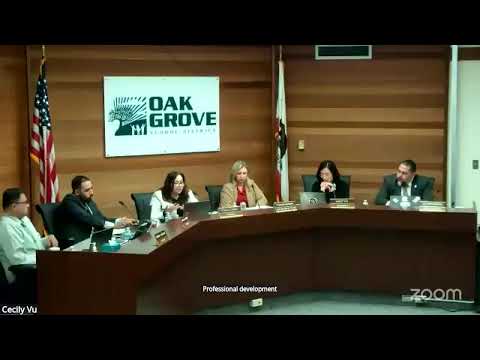
Oak Grove presents second interim budget: enrollment decline, reserves and a multi‑year outlook
Summary
Associate Superintendent Evans presented the district's second interim budget showing revenue and expenditure updates through January, a projected decline in funded ADA for 2025–26, reliance on restricted one‑time funds and a plan to use reserves to manage the multi-year deficit. Trustees approved the report on roll-call vote.
Oak Grove School District staff presented the second interim budget report on March 13, detailing the district's financial position through January and a multi-year projection through 2026–27.
Associate Superintendent Evans explained that declining enrollment — driven by lower birth rates and housing pressures — is a major driver of reduced revenue; the presentation projected a funded ADA decline of roughly 165 students for 2025–26. Staff said the district budgets conservatively for the state Cost-of-Living Adjustment, which was shown at 2.43% in the materials, and noted revenue sensitivity to May revisions to the governor's budget and capital gains volatility.
The report showed modest revenue improvements since the first interim (reimbursements and donations) but also higher expenditures (utilities, maintenance and health-care costs). Ending fund balance projections improved slightly at second interim but still rely on one-time transfers and restricted reserves — including proceeds from earlier property sales designated for specific uses — to maintain multi-year solvency.
Board members asked for clarifications on restricted vs. unrestricted fund balances, waitlist and attendance drivers, and the district's plan to maximize restricted funds to reduce pressure on unrestricted balances. Associate Superintendent Evans described potential one-time state allocations and the governor's proposals (e.g., TK add-on, learning recovery grants), but cautioned that the district does not include proposed state initiatives in the budget until the May Revise or confirmed allocations.
The board moved and approved the second interim report by roll-call vote.
Why it matters: The second interim is the board's formal check on the district's fiscal health and guides budget decisions ahead of the 2025–26 budget. Declining enrollment and rising fixed costs create structural pressures that the district says will require careful multi-year management.