Get Full Government Meeting Transcripts, Videos, & Alerts Forever!
Get email alerts on the Wastewater topic
No spam. Unsubscribe anytime.
Council approves 10% design and environmental finding for wastewater plant upgrade
Summary
Crescent City approved Jacobs’ 10% basis-of-design report and categorical CEQA exemptions to begin design and permitting for a major wastewater treatment-plant upgrade intended to meet new NPDES limits and pursue large state grant funding.
Crescent City’s council voted unanimously to adopt Jacobs Engineering’s 10% basis-of-design report and to find the project categorically exempt under CEQA (classes 15301, 15302, 15303 and 15332), clearing the way to file a notice of exemption and proceed with funding applications for a planned upgrade to the city’s wastewater treatment plant.
The project, as presented to council, would replace aging rotating biological contactors (RBCs), add filtration and attached-media biological treatment, and build redundancy by adding a second membrane bioreactor (MBR) to improve performance in wet-weather conditions. Staff told council the changes respond to revised 2024 NPDES permit limits and a sharp increase in wet-weather excursions; the city recorded numerous permit exceedances and a regulatory time schedule order that allows multi-year implementation.
City staff said the 10% design will be used to pursue grant funding and to prepare final design and construction. “If we can get in now we can be eligible for up to $50 million in grants,” the city manager said during the presentation, urging council to act quickly to align with state funding windows. The plan emphasizes keeping work within the plant footprint to streamline coastal permitting and minimize new coastal impacts.
Plant operations staff explained how the upgrade will be phased to avoid interrupting treatment. “We’ll need to time tie-ins and keep at least one treatment train available,” the plant manager said, describing summertime bypass strategies and operator training to maintain continuous service during construction.
Contract and permit staff also briefed the council on environmental and coastal review. The community development contractor said the project qualifies for several categorical exemptions given its use of the existing facility and the front-loaded cultural and biological studies. Staff recommended consolidating coastal review with the California Coastal Commission to avoid repetitive appeals and to handle the coastal development permit at the state level.
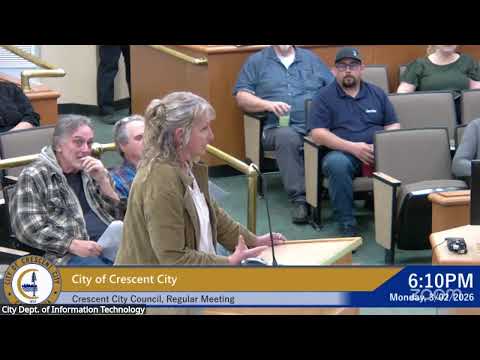
Residents raised questions during public comment about hookups, infiltration and inflow (I/I) from groundwater and old sewer joints, and whether new connections should be paused. Staff explained that wet-weather I/I is driving the peaks that trigger exceedances, not incremental dry-weather hookups alone, and proposed an infiltration and inflow study as part of the next design phase.
Council approved the design report, the environmental finding, and directed staff to file the notice of exemption and move forward with funding and design activities. The council also authorized staff to pursue an amendment to the current grant to extend the design to 30% and add an I/I study. Next steps include finalizing funding applications and preparing coastal and state water-board reviews prior to 60% design.