Get Full Government Meeting Transcripts, Videos, & Alerts Forever!
Get email alerts on the Work Based Learning topic
No spam. Unsubscribe anytime.
Board preview: proposed 'Community Internships' course would let students earn credit for supervised work
Summary
District staff presented a draft local board‑approved course called 'Community Internships' that would allow students to earn high‑school credit for supervised internships; a Landram senior described her unpaid veterinary internship and board members asked about credits, access, and equity. The board will vote on the course next month.
The Spartanburg School District 1 board heard a preview of a proposed ‘‘Community Internships’’ local board‑approved class that would let high‑school students earn course credit for supervised workplace internships.
Amy Driggers, director of secondary and CTE education, told the board administrators had prepared draft materials — a course guide, syllabus and a visual framework — and planned to bring a formal proposal for the board’s consideration at the next meeting. The course is intended to expand access to work‑based learning for students who cannot enroll in multi‑course CTE sequences or who seek internships in career fields not offered through existing programs.
“Work‑based learning provides a structure to allow students to apply their learning in concrete and meaningful ways as they transition from the classroom to the real world,” Driggers said, summarizing the rationale for the local board‑approved option.
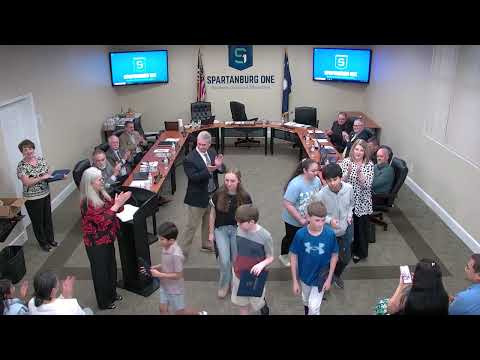
A Landram High senior, Tula Phillips, described her unpaid internship at God’s Creatures Animal Hospital: she said she has logged 81.5 hours since January, assisted with x‑rays and surgical holds, and learned the day‑to‑day operations of a veterinary clinic. “I’m learning not only by observing and shadowing, but by being hands‑on and assisting where I can,” Phillips said. She told the board the experience confirmed her desire to become a veterinarian and highlighted how unpaid, non‑credit internships can limit participation for some students.
Board members asked how the proposed course would interact with existing CTE offerings and county programs such as Swaffford’s skills courses, whether it could substitute for credit students cannot otherwise obtain, and how students would be vetted and placed with employers. Driggers said the course is not designed to bypass state‑approved CTE pathways but to provide a complementary, local board‑approved route when a full sequence is not feasible. She also said the district will develop placement and vetting policies if the board approves the course.
Driggers said materials include state requirements and sample administrative forms; the board was presented draft language and visuals to review before a formal vote. The board did not vote on the course at the meeting; Driggers asked for feedback and said the item will return for action next month.
The board’s packet and staff presentation emphasized equity and program quality: administrators said they will pilot procedures to ensure student safety, provide teacher oversight, and develop professional‑development supports for supervising staff. If approved, the district would adopt local procedures to define eligibility, placement protocols, and whether particular internships qualify for honors or elective credit.
Next steps: the board will consider the Community Internships course at the next board meeting; staff requested feedback from trustees prior to that vote.