Get Full Government Meeting Transcripts, Videos, & Alerts Forever!
Get email alerts on the Ethics Commission Meeting topic
No spam. Unsubscribe anytime.
Kentucky Legislative Ethics Commission swears in new commissioner, approves budget and votes to enter executive session
Summary
At its March 9, 2026 meeting, the Kentucky Legislative Ethics Commission swore in new commissioner Joe Palumbo, approved its minutes and staff budget, received staff updates on re-registration and financial-disclosure processing (about 10,000 forms handled), and voted to move into executive session to discuss confidential complaints and informal opinions.
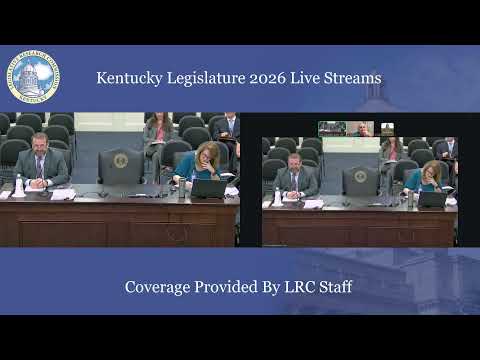
The Kentucky Legislative Ethics Commission met March 9, 2026, at 10:00 a.m. in Annex 169 and via Zoom. The panel swore in new commissioner Joe Palumbo, approved the Feb. 2 minutes and adopted a staff budget, heard staff updates on re-registration and financial-disclosure processing and voted to go into executive session under statutory authority to discuss confidential complaints and informal opinions.
Palumbo took the oath of office administered by staff and responded, "I do." He introduced himself as a Lexington resident who runs a family business that includes land development, real estate investing and a lumber company, and said he has two children attending American University and the University of Kentucky.
In routine business, the commission approved the minutes from its Feb. 2 meeting after a motion and second and carried the measure by voice vote. Staff then presented the financial reports for January and February and requested approval of the proposed budget; the commission moved and seconded that measure and the chair announced it was approved by voice vote.
Staff reported that the office handled a substantial volume of filings this cycle: roughly 4,500 re-registrations plus multiple expense-report cycles and related filings, which staff summarized as about "10,000 forms" processed in total. The commission also noted that an online payment portal approved in November has reduced manual payment work.
On technology, staff explained the vendor is developing a new web-based database and document-filler that will include an online re-registration module, a desktop application used in the office and an integrated payment portal. Staff said the system is being built in phases and that parts already exist, but the complete web filing environment will require all components to be finished before staff can switch over; no firm completion date was given.
A staff presenter who reviewed financial disclosures said she examined filings for both sitting legislators and candidates, reporting that candidates—who rely on PDF workflows—faced a more burdensome process. She said one state senate candidate had an outstanding disclosure; staff confirmed they have sent statutorily required certified-mail notice and will continue the notification process unless the candidate withdraws.
Commissioners and staff commended the office for handling a heavy workload, discussed the use of email and e-signature services (DocuSign, Adobe Sign) to collect required signatures, and noted work to index and track informal advisory opinions and past records to improve consistency.
Finally, pursuant to cited statute "61 8101 CJ J and K," the chair moved to go into executive session to discuss confidential complaints and informal opinions; the motion passed by voice vote and the commission prepared to leave the public meeting record.
The commission left the public record for executive session; no further public actions were announced at the end of the provided transcript.