Get Full Government Meeting Transcripts, Videos, & Alerts Forever!
Get email alerts on the Inspections And Technology topic
No spam. Unsubscribe anytime.
Air district outlines tech, AI and inspection approach; staff cautious on remote and coordinated multi‑agency inspections
Summary
Engineering and compliance staff explained why field inspections remain central, described selective use of remote inspections and new tools (satellite methane mapping, data system, AI pilots), and said simultaneous multi‑agency inspections would usually be disruptive; drones may be useful for large facilities but are not deployed for residential inspections.
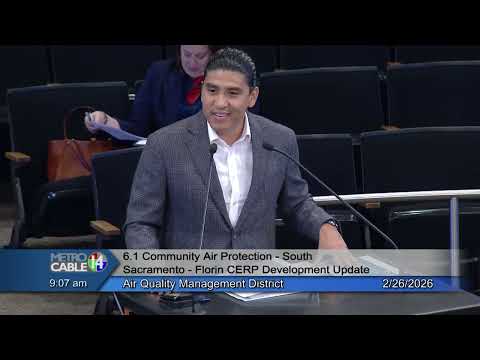
The Sacramento Metropolitan Air Quality Management District on Feb. 26 reported progress on technology, data modernization and inspection practices used to enforce permits and reduce emissions.
Angela Thompson, program manager in engineering and compliance, told the board the district has adopted a cloud data system that supports paperless workflows and analytics, and staff are evaluating satellite methane detection, specialized leak detectors and AI tools for data review and drafting routine documents. She said the district has piloted remote inspections during the pandemic and found them useful for narrow, well‑defined checks but not adequate for complex facility walk‑throughs.
"Field inspections allow us to directly see equipment and more importantly the entire operation," Thompson said, adding that remote inspections shifted record‑gathering burdens onto regulated sources and missed violations that were later observed during field returns.
On drones, Thompson said legal and privacy constraints limit residential use but the agency is monitoring other districts' use for large oil‑and‑gas or landfill sites. The board also discussed coordination: staff said joint, same‑day inspections by multiple agencies are sometimes appropriate for high‑risk sites but often extend inspection time and can overwhelm businesses because each agency follows different statutes, objectives and training requirements.
Directors pressed on opportunities to improve efficiency, including cross‑training and targeted information sharing. Director Dickinson asked whether AI could be used to draft inspection reports and permits; Thompson said the district is piloting AI to reduce staff review time for data and to standardize outreach letters and templates while keeping security guardrails in place.
The district emphasized a cautious, targeted approach: it will continue to use remote or delegated inspections where they add value, pursue AI pilots and add technologies to its toolbox as legal and operational constraints allow.