Get Full Government Meeting Transcripts, Videos, & Alerts Forever!
Get email alerts on the Community Emission Reduction topic
No spam. Unsubscribe anytime.
Air district details community‑led South Sacramento/Florin emission‑reduction plan; board to consider adoption in May
Summary
Staff presented the AB617 South Sacramento/Florin community emission reduction plan (SER), describing 28 community‑developed strategies, participatory budgeting, and a May board consideration with July state submission; implementation would span five years after adoption.
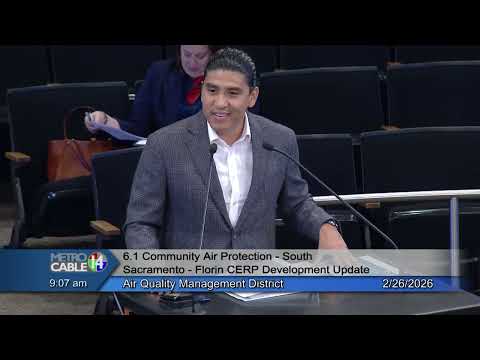
The Sacramento Metropolitan Air Quality Management District on Feb. 26 received a detailed update on its AB617 South Sacramento/Florin community emission reduction plan, a community‑driven package of 28 strategies focused on urban greening, mobile sources, residential and commercial measures, and outreach. Janice Slam Snider, director of community air protection, told the board the plan aligns state, regional and local efforts and carries metrics and targets for each recommended strategy.
"We put in thousands of hours in community engagement," Janice Slam Snider said, describing steering‑committee workshops, public voting events and translated outreach. The steering committee — 14 resident members and five community organizations — used a participatory budgeting exercise to prioritize strategies representatives said the community wants implemented first.
Why it matters: the SER targets hot‑spot exposures in a historically overburdened area and is intended to move state funding into projects residents selected. The district must submit the final plan by the statutory July deadline; staff said they will present a recommended plan for board consideration in May and, if approved, will have five years to carry out implementation actions.
Staff and community leaders emphasized the limits of local authority and the need for partnerships. Paul Philly, the district’s transportation and climate program manager, noted the district has historically invested about $40 million in the area through incentives and infrastructure programs and said the SER focuses capacity on actions the district can influence alongside cities, transit operators and the California Air Resources Board.
Community speakers highlighted urban tree canopy as a top priority. Tito Hang and Roberto Rizo, co‑leads on the steering committee, said residents voted on how incentive funds should be allocated and welcomed the plan’s emphasis on trees, street safety and school education programs. Jessica Sanders, CEO of the Sacramento Tree Foundation, told the board that planting in under‑canopied neighborhoods is costlier and requires long‑term care and coordination to avoid displacement: "By working with the community, the air district is ensuring that trees and the plan are meant for the current community to enjoy, not just the future."
Board members who spoke praised the authenticity of community engagement and flagged implementation challenges. Director Kennedy asked how staff will handle written comments; staff committed to publishing a formal comment‑response document next month. Another board member noted that state cap‑and‑trade allocations remain annual and competitive and urged continued work with ARB to secure implementation funding.
What’s next: staff will return with recommended edits that reflect jurisdictional comments and a formal response to public comments, and the board is scheduled to consider adoption of the SER in May before the July submission deadline. No formal board action on adoption occurred at the Feb. 26 meeting.