Get Full Government Meeting Transcripts, Videos, & Alerts Forever!
Get email alerts on the Judiciary Probate Reform topic
No spam. Unsubscribe anytime.
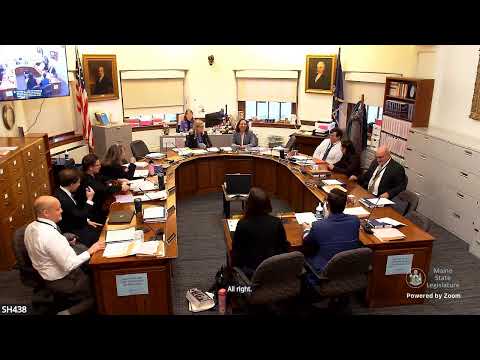
Judiciary committee signs off on final language for LD1766 to create state probate judges
Summary
Committee completed a final language review of LD1766, the implementing bill for a 1967 constitutional amendment to convert county probate judges to appointed full‑time state judges; the amendment adds a Supreme Judicial Court report due Jan. 15, 2028 and appropriates planning staff for the transition.
The Joint Standing Committee on the Judiciary completed a final language review of LD1766 on Feb. 20, 2026, advancing a majority report that adds implementation details for moving county probate judges into the state judicial branch.
Janet Stoko of the Office of Policy and Legal Analysis told the committee the amendment preserves the core policy from the constitutional change — replacing part‑time elected probate judges with full‑time appointed probate judges assigned by prosecutorial district — and adds implementation steps. “What is new to this version of the amendment is section A3,” Stoko said, describing a requirement that the Supreme Judicial Court submit a progress report to the committee by Jan. 15, 2028 on planning for establishment of the new probate court structure.
The amendment also adds a fiscal package for startup planning: an appropriation to establish one process specialist and one project manager during the biennium to prepare for the judiciary’s anticipated appointment of state probate judges, with the first slate of judges expected to begin Jan. 1, 2029. Stoko told members the fiscal note projects substantially higher costs once new judges and support staff begin in FY2028‑29.
Committee members asked about registry services now run at the county level. Stoko said the amendment asks the Supreme Judicial Court to evaluate whether county registries should remain elected, county‑based registrars or be integrated into the judicial branch while preserving locally valuable functions such as in‑county presence and limited legal advice capabilities.
The committee took no further substantive changes at today’s review and approved the majority ‘‘ought to pass as amended’’ language for the report back. The chairs and staff will include the revised language and the new fiscal information in the committee’s report to the Appropriations and Financial Affairs Committee.
What happens next: The amendment requires the Supreme Judicial Court to report to the Judiciary Committee by Jan. 15, 2028 on planning and preparatory work; actual statewide implementation of state probate judges is projected to begin in 2029. The committee’s report will move with the supplemental budget materials to AFA for consideration.