Get Full Government Meeting Transcripts, Videos, & Alerts Forever!
Get email alerts on the Education Strategic Plan topic
No spam. Unsubscribe anytime.
Mosinee School District workshop stresses 'students first,' highlights ~$250,000 in workforce grants
Summary
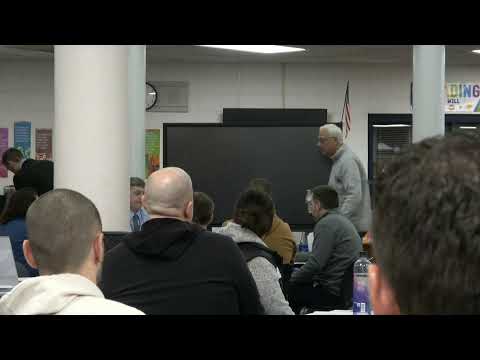
At a community workshop to shape the districts next strategic plan, a visiting facilitator and district director urged a 'students first' approach, highlighted work-based learning strengths and two DWD Fast Forward grants totaling about $250,000 for new CTE equipment, and asked residents for input at tonights session and a follow-up on April 15.
Ty, the facilitator brought in for the Mosinee School District community workshop, opened the session with logistics and set ground rules before asking attendees to help shape — not write — the districts next strategic plan.
Ty told the group their role was to "share your experiences and help identify priorities" and repeatedly framed the process around a central value: "Students first, right? Students first, absolutely." He said the exercise is being held in two sessions, with the next meeting scheduled for April 15, and that leadership will use community input to draft a plan for the school board to review.
Tom McCarty, the districts director of innovation and strategic growth, gave district context, saying the prior strategic plan covered 2020—24 and that the district is adopting broader measures of readiness through the Redefining Ready movement. McCarty said those measures include GPA, dual-credit access, attendance and other indicators that show college and career readiness beyond standardized test scores.
McCarty highlighted the districts work-based learning programs and recent equipment investments. "Over the last 2 years, we've been awarded two major DWD Fast Forward grants, which totals about $250,000 in new equipment that will be going into the new CTE space when it's done," he said, listing items such as a CNC plasma cutter, a Fanuc material-handling robot, a Fanuc robot weld cell, a 3D area scanner and additional 3D printers, plus virtual- and augmented-reality welding trainers intended to expand safe, hands-on practice.
He said the district convened roughly 20—25 local business leaders to identify gaps between graduate skills and employer needs. Employers pointed to interpersonal communication, creative problem solving and analytical thinking as areas for improvement, McCarty said, and the district is discussing how to build those capabilities into core academic courses and personalized student pathways.
McCarty also flagged a broader concern about postsecondary outcomes and costs, noting, "The average debt of a college graduate now is about $32,000," and arguing that the district must help students find varied pathways (college, technical training, apprenticeships) that match their interests and financial realities.
Facilitator Ty and district staff explained the nights small-group exercises, provided placemats and data summaries on the district website, and directed participants to use two post-it notes each to surface priorities. Todd, a district staff member introduced for the small-group work, was identified as available to answer questions about student achievement data.
The workshop sought input on K-12 sequencing, pathways to careers, and how to keep students engaged. Organizers said community input from these sessions will inform a draft strategic plan that the school leadership will refine and send to the Mosinee School District board for review and approval.