Get Full Government Meeting Transcripts, Videos, & Alerts Forever!
Get email alerts on the Land Use topic
No spam. Unsubscribe anytime.
Council work session yields compromise on University Boulevard plan, prioritizing pedestrian safety while sparking debate over upzoning
Summary
After a multihour work session, the Montgomery County Council’s planning committee recommended zoning and design changes for the University Boulevard corridor that prioritize pedestrian and bicycle safety — including repurposing travel lanes in Four Corners — while narrowing where single-family lots would be rezoned. The debate exposed deep disagreements over displacement risks and housing yield.
The Montgomery County Council spent the morning of Nov. 18 walking through a contested draft of the University Boulevard corridor master plan, with the planning, housing and parks committee endorsing a package of changes focused on pedestrian safety and modest, targeted housing growth.
The committee recommended limiting vehicle connectivity that would channel cut-through traffic into neighborhoods, prioritizing pedestrian and bicycle links and adjusting zoning on properties abutting University Boulevard to a CRN (commercial-residential neighborhood) standard in many places while lowering some previously proposed height limits. The committee also reaffirmed support for the county’s bus-rapid-transit (BRT) master-plan alignment but rejected earlier proposals that would have widened rights-of-way through Four Corners for a second phase of vehicle-focused expansion.
Why it matters: The corridor runs past two large high schools and multiple community destinations, and committee members repeatedly cited student and pedestrian safety when supporting reconfiguration of lanes through Four Corners. The committee approved the public-hearing draft option to repurpose one travel lane in each direction within Four Corners to create wider, low-stress walking and cycling facilities and more space for safer bus stops and sidewalk buffers, rather than add dedicated curbside bus lanes that would have required additional right-of-way and, some members argued, significant engineering tradeoffs.
What the committee changed: Planning staff showed the council where the committee had trimmed building heights on several commercial parcels — for example, lowering multiple parcels’ recommended heights from the 75–100-foot range to 60–65 feet — and narrowed the geographic scope of upzoning so that many single-family blocks beyond the immediate abut of University Boulevard were not rezoned. The committee also added a workforce-housing proposal to require a percentage of workforce units on projects of three or more units in the rezoned areas.
The dispute over displacement: The session featured extended debate over whether the proposed rezonings could displace existing homeowners of color. The Office of Legislative Oversight presented a racial-equity and social-justice assessment warning that rezoning single-family parcels could increase property values and taxes, potentially disproportionally affecting Black and Latinx homeowners. Planning staff countered that the CRN approach is intended to lower the cost and regulatory burden for modest infill (duplexes/townhouses) compared with building a new detached single-family home and that additional options might help preserve affordability — but that some displacement risk remains without explicit anti-displacement requirements.
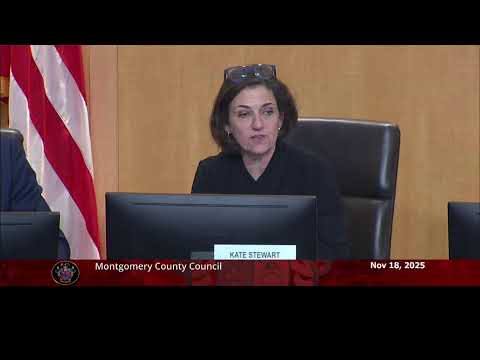
Next steps: Staff will fold the committee edits into draft language and return the packet for further council review and a planned straw vote on Dec. 2. Council members asked for more detail on the transportation buffers and the financial and implementation implications of any no-net-loss or other anti-displacement measures. Council President Kate Stewart emphasized that the morning’s decisions were part of an effort to balance safety, housing supply and compatibility with adjacent neighborhoods.
Reporting from the meeting: Council Member Andrew Friedson introduced the World Day of Remembrance ceremony earlier in the morning and several families testified on road fatalities — comments that influenced the committee’s safety framing. Planning Director Jason Sartori and Miss Dunn of planning staff provided the technical briefings. Several council members, including Vice President Will Jawando and Council Member Fanny Gonzalez, led the most extensive debates over housing policy, displacement risk and zoning mechanics.
What to watch: The council will consider committee edits and related zoning text amendments in the coming weeks; the Planning Board and Office of Legislative Oversight have both requested continued dialog about displacement mitigation and project-level approaches that could preserve existing affordability where feasible.