Get Full Government Meeting Transcripts, Videos, & Alerts Forever!
Get email alerts on the Economic Development topic
No spam. Unsubscribe anytime.
Presenters brief Polk County commissioners on Opportunity Zones 2.0, timeline and local options
Summary
Consultants who helped produce Business Oregon’s webinar outlined how OZ 2.0 differs from OZ 1.0, the nomination process led by Business Oregon and the governor’s office, likely eligible Polk County census tracts, and a timeline for applications to take effect in January 2027.
John Lagarza and a co-presenter, Andre, briefed the Polk County Board of Commissioners on Opportunity Zones (OZ) 2.0 on March 3, describing how the updated federal framework narrows eligibility, creates incentives for rural census tracts and establishes a state nomination process that could make some Polk County tracts competitive for designation.
"OZ 2.0 is more restrictive on the census tracks that are eligible," Andre said, adding that the program has been made permanent and will nominate new tracks every 10 years. Presenters said Treasury will certify an initial list based on American Community Survey (ACS) data and Business Oregon will run a state-level nomination and scoring process; the governor's office will forward recommendations to Treasury.
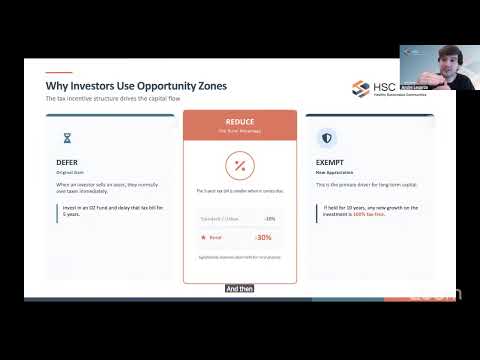
Presenters emphasized the investor mechanics: an investor may defer capital gains by rolling proceeds into a qualified opportunity fund within 180 days, defer tax for five years, and — "if an investment stays within one of these funds for more than 10 years, any appreciation to that investment is tax-free," Andre said. Presenters framed OZ 2.0 as a tool to attract long-term private equity to communities that can show development readiness.
For Polk County, presenters said preliminary ACS-based analysis shows four census tracts likely eligible under OZ 2.0. They pointed to areas around Independence, Dallas and parts of West Salem as places county staff and local partners should assess for developable land, infrastructure capacity and shovel-ready projects that would strengthen a nomination.
Commissioners pressed presenters on several points. One asked which federal definition of "rural" would be used and whether parts of Polk County inside the Salem metropolitan statistical area might lose rural classification; presenters distinguished likely urban tracks (e.g., West Salem) from rural tracks (e.g., Dallas, Independence). Another commissioner asked whether state capital gains rules would mirror federal deferrals; presenters said they were not aware of any state-level adoption of the federal deferral. Commissioners also raised land-use concerns after presenters noted some eligible tracts include Exclusive Farm Use (EFU) or forestry land and suggested local coordination before nominating such tracts.
Presenters advised counties and cities to collaborate and to prepare competitive nomination packages that demonstrate project pipelines, infrastructure readiness and complementary incentives. They said Business Oregon expects to publish scoring criteria and open applications in late March or April following Treasury's release of the certified tract list; the governor's office would then have 90 days to submit nominations to Treasury, and certified designations would take effect in January 2027.
The commission did not take formal action on the matter during the session. The presentation served as an informational briefing and a prompt for staff-level review and interjurisdictional coordination.