Get Full Government Meeting Transcripts, Videos, & Alerts Forever!
Get email alerts on the Public Safety topic
No spam. Unsubscribe anytime.
Lewiston weighs who should pay for parade traffic control and whether to buy hardened barriers
Summary
Public Works and Police told council that in practice the city covers traffic control and overtime for traditional events, but code is ambiguous; council asked staff to develop tiered fee options, budget line items, and potential procurement of movable protective barriers, and to return with recommended code amendments and cost options by April 20.
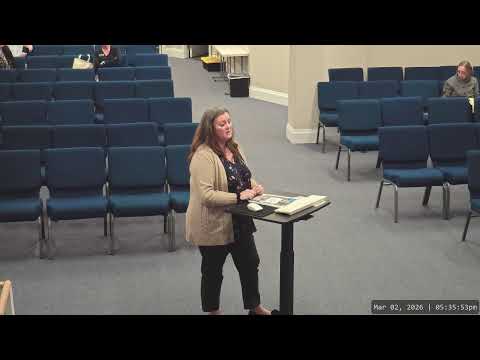
Public Works Director Dustin Johnson told the Lewiston City Council on March 2 that Lewiston’s code for parades and public assemblies (city code chapters 9 and 10) lacks clarity about who must pay for traffic-control implementation, while current practice is for Transportation/Streets to set barricades and city staff and police to provide traffic control and overtime.
Johnson reviewed the municipal permitting process (traffic control plans required as part of an application), the 14 criteria staff considers when approving closures, and examples of recent events. He cited a notable increase in Veterans Day closure costs (from about $2,200 to roughly $4,000 year-over-year) driven by additional security measures and the use of heavy equipment to establish hardened perimeters.
Captain Chris Reese of the Lewiston Police Department advised that hardened movable barriers reduce the risk of vehicle-borne attacks and are recommended by federal guidance; he described commercially available mobile systems that fold into trailers and allow relatively quick deployment but noted they are costly. Council and staff discussed price and operational tradeoffs — Barrier systems quoted in discussion ranged widely; council asked staff to secure accurate procurement quotes and to estimate lifecycle and staffing costs.
Councilors debated whether the city should continue to absorb street-closure costs for community events (Roundup Parade, Hot August Nights, Pumpkin Palooa) or adopt a tiered fee model that charges for-profit events while exempting city-sponsored or lower-income community activities. City attorney Jennifer Tangado warned council to guard against First Amendment concerns when drafting permitting criteria and fee rules.
Council directed staff to: (1) draft code language that clarifies responsibilities and permissible fee tiers; (2) provide procurement options and cost estimates for movable hardened barriers and staffing impacts; (3) propose a budget line item for parade/event overtime or alternatives for cost recovery; and (4) return with options and legal analysis for a work session on April 20.