Get Full Government Meeting Transcripts, Videos, & Alerts Forever!
Get email alerts on the Elections topic
No spam. Unsubscribe anytime.
Chairman Martin presents bill to apply foreign‑donation rules to ballot referenda
Summary
Chairman Martin introduced HB963 to mirror federal limits on foreign national contributions and extend reporting and prohibitions to ballot referenda and constitutional amendments; he said enforcement would fall to the State Ethics Commission and reporting would include an affirmative checkbox for donations.
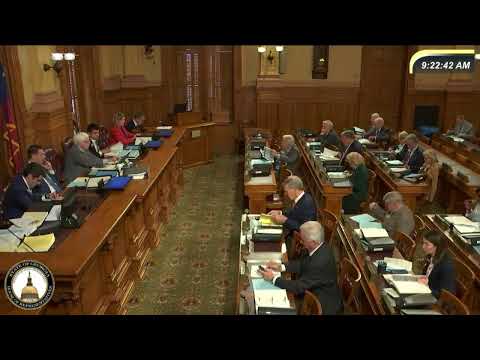
Chairman Martin presented House Bill 963 to the Rules Committee, explaining the bill mirrors federal restrictions on foreign national contributions and extends those restrictions to ballot referenda and constitutional amendments.
"It basically committees that are required to report today if they receive donations from foreign nationals are required to acknowledge those and those would need to be returned — those would be unallowed," Chairman Martin said, describing the proposal’s reporting and return requirements.
Members asked how the process would operate in practice. Chairman Martin pointed to specific language in the bill and said committees would be required to acknowledge foreign donations; he added that the State Ethics Commission would handle investigations and enforcement if foreign donations were later alleged. "That that would fall... under the purview of the State Ethics Commission," he said.
When Leader Hugley asked whether campaigns would need to certify each donation, Chairman Martin said reporting would include an affirmation or checkbox to indicate whether a donation was from a foreign source. He also told the committee the bill’s provisions would apply to local referenda, municipal and county ballots as well as state referenda and constitutional amendments.
No vote was taken during the hearing; the transcript did not record any recorded enforcement procedures beyond referral to the State Ethics Commission or the bill’s subsequent committee referral.