Get Full Government Meeting Transcripts, Videos, & Alerts Forever!
Get email alerts on the Short Term Rentals topic
No spam. Unsubscribe anytime.
Indio council reviews STR overhaul: SB 346 compliance, daytime caps and a proposed ban on "party houses"
Summary
City staff outlined changes to implement SB 346, require platform verification, add daytime occupancy caps and prohibit properties used primarily as event venues, steering owners who want events toward a separate permitting path.
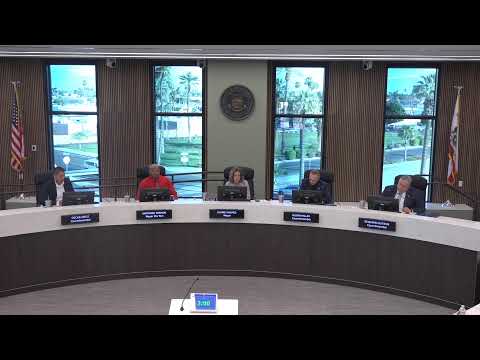
Indio City staff presented proposed changes to the city's short-term rental (STR) ordinance at a March 4 study session, saying state law changes and neighborhood complaints require the city to tighten rules.
City Attorney Steven Pacificico told the council the update would implement SB 346, the Short-Term Rental Facilitator Act, allowing the city to require platforms such as Airbnb and VRBO to verify a property has an active permit before bookings and to provide data for transient occupancy tax and audits. "SB 346, it's the short-term rental facilitator act," Pacificico said, adding the ordinance would add verification and auditing authority.
The staff proposal would also add daytime occupancy limits to close a longstanding loophole. Pacificico explained current nighttime limits are based on bedroom count and that staff recommends daytime caps be aligned to prevent large daytime gatherings. Using a three-bedroom example, he described how daytime limits could raise the maximum from an already-allowed nighttime total of 10 to a daytime limit that would prevent substantially larger gatherings.
Pacificico recommended defining and prohibiting "party houses": properties whose primary use is events rather than lodging. He said owners who want to host events would be directed toward an event-permit process with its own conditions and review. "If a property owner wants to look at using their property for events, we're going to want'we're recommending that the council push them towards the event permitting process," Pacificico said.
During public comment, a short-term rental operator introduced as David E is, who identified himself with Desert Rodeo/Local Concierge, said he supports the draft language and suggested considering minimum lot sizes (for example, roughly one acre) to reduce neighborhood impacts. "It reads really well. It's extremely reasonable," the operator said. Miles Warner, another operator, urged clarity so operators can comply reliably. Resident representative Richard Zizian said some neighborhoods risk becoming saturated by commercial rentals and warned of the harm if many dwellings become event-only uses: "Nobody lives there. And my fear... is that concentration becomes impossible for us to live with," he said.
Council questions focused on whether the city should use an annual business permit (hearing-officer model) or land-use permits for event uses, and on enforcement logistics such as how strikes would be tallied and whether enforcement hearings should be handled by a hearing officer to avoid administrative bottlenecks. Pacificico said staff will draft ordinance language reflecting council feedback for subsequent formal review and that the council could revisit any proposed implementation after a probationary monitoring period.
The council did not take formal action at the study session; staff will return with draft ordinance language and recommended procedures for final ordinance review and adoption.