Get Full Government Meeting Transcripts, Videos, & Alerts Forever!
Get email alerts on the County Budget topic
No spam. Unsubscribe anytime.
Gratiot County commissioners adopt 2024–25 budget, add $9,000 for magistrate overtime
Summary
The Gratiot County Board of Commissioners approved the 2024–25 general fund budget and millage rates after a public hearing, agreeing to one-time transfers to an OPEB trust and airport seed funding and approving a $9,000 amendment for district court magistrate overtime.
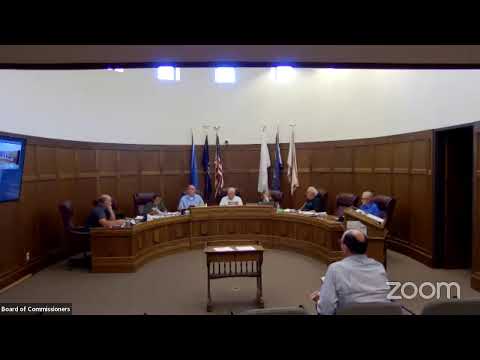
The Gratiot County Board of Commissioners voted to adopt the county's 2024–25 general fund budget and set millage rates after a public hearing and line-by-line discussion of one-time payments and reserve balances. The board approved Resolution 24 of 327 and later passed a $9,000 amendment to cover magistrate overtime.
Administrator-level staff told the board the budget shows an approximate $300,000 projected deficit next year driven by $1.4 million in planned one-time payments, including seed money for the county airport and an additional deposit to the county's post-employment benefits trust. "We will spend just under $300,000 of that for purposes of planting seed money into the airport and to pay off our OPEP deficit," the administrator said, and added the county would still maintain an estimated $7.5 million general fund balance at year-end.
The administrator said the county plans to transfer about $400,000 from the general fund to the OPEP/OPEB trust to bring the account closer to the actuarially required balance; the trust currently holds roughly $2.5 million against an estimated need near $2.9 million. The presenter explained that those are one-time payments and not recurring operational spending, which is why the board treated them as planned draws from fund balance.
Commissioners discussed revenue composition and risk. One commissioner noted that roughly 40 percent of the county's tax base currently comes from renewable-energy property, which the board characterized as a depreciating tax base compared with traditional real estate. "If we invest depreciating revenues into operations or salary, eventually those revenues will disappear but the operations and salary are expected to stay," a commissioner said, urging use of those funds for one-time liabilities.
Before the final adoption vote, the board approved the county's millage rates, including a newly voted 911 millage added to the roll. The board then adopted the FY 2024–25 General Appropriations resolution by roll call; Commissioners Bailey, Bundy, Gay, Sapy and Owens recorded "yes" votes and the resolution passed.
Immediately after adoption, the board considered a $9,000 budget amendment requested by the district court to cover magistrate overtime next fiscal year. The administrator explained the county policy requires board approval for nonrecurring overtime requests. Commissioners asked clarifying questions about scope (overtime for magistrates only, not clerks) and timing (the request applies to the upcoming fiscal year). The board approved the $9,000 amendment by voice vote.
The meeting record shows the board also approved a consent calendar and heard the administrator's report on other county business, including ARPA fund distribution and capital projects. The board set technical budget amendments across several funds to ensure compliance with Michigan's statutory requirement that no program spend beyond its appropriated amount.
The meeting adjourned after routine financial reports and payment of bills; no substantive public comments on the budget were recorded during the hearing.
Next steps: the resolution takes effect with the start of the fiscal year; staff will complete the detailed fund transfers and the administrator said he will return any required contract or implementation documents to the board as actions proceed.