Get Full Government Meeting Transcripts, Videos, & Alerts Forever!
Get email alerts on the Transportation Ebikes topic
No spam. Unsubscribe anytime.
Santa Cruz to pursue local and state action on e‑bike age and speed limits; council backs education and enforcement
Summary
Following widespread public concern about high‑speed and sidewalk e‑bike use downtown, the council directed staff to pursue state pilots/legislation on minimum rider ages and local authority for speed limits, expand school‑based education pilots and evaluate fines and signage consistent with municipal code.
The Santa Cruz City Council on Feb. 24 approved a package of directions on e‑bike regulation that asks staff to pursue state and regional coordination on rider age and speed limits, to pilot school‑based safety and parking permitting, to implement a social‑norming signage campaign, and to evaluate fee/fine options consistent with the municipal code.
Claire Gallogly, the city’s principal transportation planner, reviewed California’s three‑class e‑bike system (Class 1 and 2 up to 20 mph, Class 3 up to 28 mph, 750‑watt limit) and differentiated street‑legal e‑bikes from out‑of‑class, higher‑powered e‑motors that police have been impounding.
Gallogly described several local actions already underway: an education pilot with Santa Cruz City Schools and Ecology Action that will pair in‑person safety training with a middle‑school e‑bike parking permit; a planned 'Shared Space, Shared Pace' signage roll‑out on multi‑use paths; and enforcement work that has included impoundment of illegal high‑powered devices. She also highlighted recent state activity including multiple bills on e‑bike speed, power and registration and AB2346 (which would allow local agencies to set speed limits on active‑transportation facilities).
Vice Mayor Kalantari‑Johnson brought a motion directing staff to work with state and regional partners to pursue pilot programs or legislation to establish a minimum rider age (the motion flagged 'at least 10' for Class 1 and 2 as a starting point for regional/state discussion), to evaluate and return with support or recommendations related to AB2346 for local speed limits on multi‑use paths and bike facilities, and to explore increasing fines consistent with the municipal code. Councilmember O'Hara seconded. The motion passed on roll call with all present voting yes.
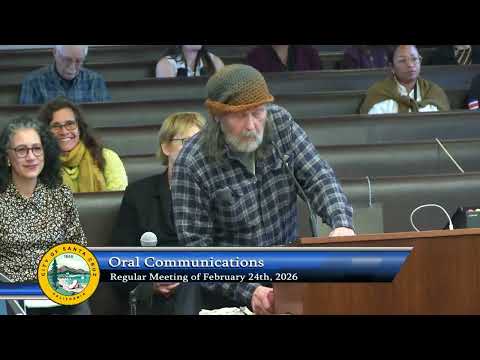
Public commenters described near‑misses and safety incidents downtown, urged a ban on sidewalk riding downtown, and suggested stronger visible signage and enforcement. A downtown vendor recommended larger penalties for repeat offenders; others urged education‑first approaches for youth who rely on e‑bikes for school access.
Councilmembers emphasized a balanced approach: continued education and school‑based permit pilots to maintain youth mobility, paired with targeted enforcement and consideration of local speed limits if state action does not materialize. Staff will return with more detailed proposals and an analysis of options for fines and consistent municipal‑code updates.