Get Full Government Meeting Transcripts, Videos, & Alerts Forever!
Get email alerts on the Foreign Policy topic
No spam. Unsubscribe anytime.
Witness outlines U.S. objectives to curb Iran’s missiles, drones and nuclear ambitions
Summary
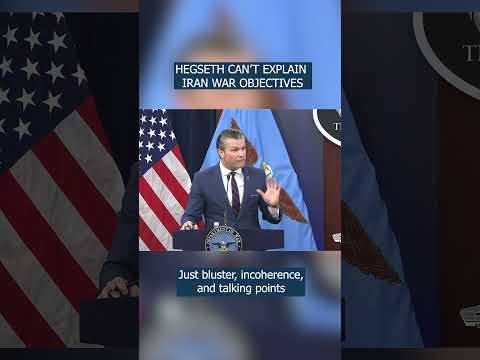
During a hearing exchange, a witness said U.S. policy aims to deny Iran the ability to project power via missiles, drones and naval forces and to prevent it from obtaining a nuclear weapon; the witness did not provide details on how recently killed soldiers died.
A committee member asked a witness for clearer aims and casualty details, referencing a presidential video message that “we will leave Iran when we complete all of our objectives.” The committee member also asked whether the witness could share more information about how the soldiers who were killed were killed.
The witness replied that the goals are nested and focused on denying Iran the ability to threaten the United States and its allies. “Iran has an ability to project power against us and our allies in a ways that we can't um we can't tolerate,” the witness said, citing offensive capabilities including ballistic missiles, drones and naval forces.
The witness linked those tactical objectives to nuclear nonproliferation. “You can't have a nuclear bomb. Radical Islamists can't have a nuclear bomb that they wield uh against the world,” the witness said, and said the president had been willing to negotiate but that Iran had not come to the table in a way that resolved those ambitions.
The hearing record does not include a description by the witness of how the soldiers were killed; the witness did not provide operational casualty details in the transcripted exchange.
The exchange focused on broad U.S. objectives—limiting missile, drone and naval threats and preventing nuclear development—rather than operational details about recent fatalities. No formal motion, vote or next procedural step is recorded in the transcript.