Get Full Government Meeting Transcripts, Videos, & Alerts Forever!
Get email alerts on the Traffic Safety topic
No spam. Unsubscribe anytime.
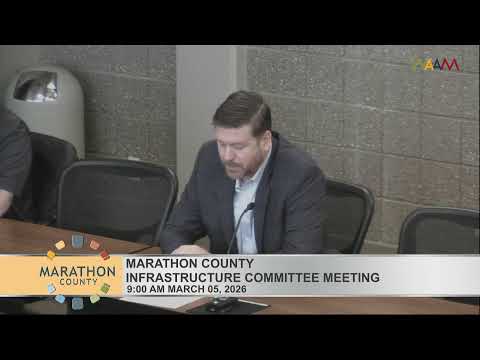
Infrastructure committee sends 45→35 mph request on County NN to county board after residents cite safety concerns
Summary
After extensive public comment from Rib Mountain residents about near‑misses and children’s safety, the Marathon County Infrastructure Committee voted unanimously to forward a request to reduce the speed limit on County NN from 45 mph to 35 mph (Snowbird Avenue to Whipperwill Road), add a no‑passing zone, narrow lanes and increase enforcement during the transition.
Marathon County’s Infrastructure Committee voted unanimously Thursday to forward a package of traffic measures to the county board aimed at making County NN safer for residents, cyclists and pedestrians.
The motion, moved by Supervisor Hardinger and seconded by Supervisor Grinder, asks the county board to reduce the speed limit from 45 to 35 mph between Snowbird Avenue and Whipperwill Road, add no‑passing signage in the same area, narrow lane striping during an upcoming resurfacing and request 60 days of increased law enforcement while drivers adapt. The committee approved the motion by voice vote.
The action followed nearly an hour of public comment from residents of the Village of Rib Mountain and nearby neighborhoods who described frequent “near misses” when entering traffic, drivers passing in opposing lanes and a growing number of cyclists and children using the corridor. Cindy Hogan, who said a petition of more than 75 residents supported the request, told the committee the traffic study “may not fully capture the day‑to‑day realities and safety concerns experienced by the community.”
Several residents noted a new bike park due to open this summer, which they said will increase family and recreational bicycle traffic. "A roadway posted at 45 miles per hour, where vehicles often travel faster, creates a significant barrier to safe access," said Dean Canterburgg, who said he gathered petition signatures.
County Highway Commissioner Kevin (last name not specified in the meeting record) said the Clark traffic study largely met professional criteria but sits “on the verge” of the semi‑urban threshold the state statute uses to define lower limits: staff measured an average access spacing of about 180 feet in parts of the corridor. He described a recommended, incremental approach tied to the planned resurfacing: narrow lane striping (to change driver perception of width), 5‑ft paved shoulders where policy supports them, conservative no‑passing layouts at conflict points such as Boulder Ridge, and consideration of permanent radar feedback signage.
Kevin said crash counts on County NN are below the statewide average for similar roads and that staff did not find documented pedestrian crashes in the study period, but acknowledged the difficulty of capturing sporadic bike/ped activity in winter studies. "Ped and bike data is difficult to collect because it is sporadic," he said, and recommended seasonal counts in spring and summer to better inform future changes.
Kurt Shane, director of streets and parks for the Village of Rib Mountain, cited Wisconsin Statute 346.57 in arguing the corridor should be considered semi‑urban and receive lower limits in some segments. Shane told the committee that Clark’s analysis identified multiple segments with building frontage spacing below the statutory 200‑foot threshold.
Supervisor Hardinger’s motion instructs staff to forward the request and recommended measures to the county board; it also asks for increased enforcement during the 60‑day transition. Committee members asked staff to defer implementation of any permanent no‑passing signage until the resurfacing work is underway to avoid duplicate work.
Next steps: the county board will consider the committee’s request. The committee did not set a schedule for additional pedestrian/bicyclist counts; staff said they could deploy portable counters or move timing to late spring when seasonal usage increases.
The meeting record does not show a roll‑call tally of individual votes; the committee approved the motion by voice as unanimous.