Get Full Government Meeting Transcripts, Videos, & Alerts Forever!
Get email alerts on the College Sports Regulation topic
No spam. Unsubscribe anytime.
Trump convenes bipartisan group, backs SCORE Act framework and pledges executive order within a week
Summary
President Trump hosted lawmakers, university leaders and sports executives to push federal action on NIL, transfers and eligibility; House leaders promoted the SCORE Act as a legislative base while Trump said he would issue an executive order within one week if Congress does not act.
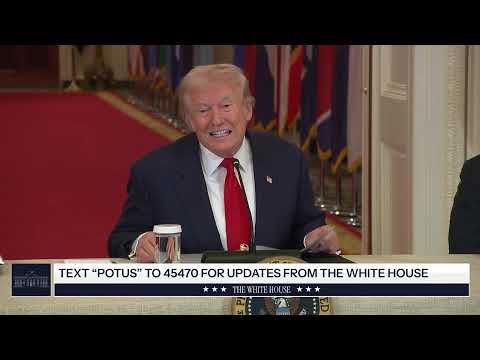
President Donald J. Trump convened a bipartisan meeting at the White House on Thursday to press for federal action on name-image-and-likeness compensation, transfer rules and eligibility in college athletics, endorsing the House'backed SCORE Act as a starting point and announcing that he would sign an executive order within one week if lawmakers fail to act.
The meeting gathered House leaders, governors, conference commissioners, university presidents, athletic directors and coaches who warned that current legal rulings and a patchwork of state laws have disrupted scholarship models, driven spikes in compensation and put many nonrevenue and Olympic sports at risk.
"If Congress does not take action fast, it could destroy college sports and destroy the colleges that play these sports," Trump said in opening remarks, later adding, "I will have an executive order within one week." He acknowledged the order would likely face litigation: "We will get sued," he said, and said its fate would depend on the courts.
Why it matters
Participants argued that the existing patchwork of state laws and recent court rulings have allowed market forces and donor-driven "collectives" to sidestep institutional controls, driving payouts that some speakers said are unsustainable and that have contributed to reported losses at athletic departments. Proponents urged a national standard that would allow governing bodies to set uniform eligibility and transfer rules while protecting those rules from antitrust challenges.
"We create a national NIL standard and then allow the associations the authority to make rules on transfers and compensation," House Speaker Mike Johnson said, urging participants to use the SCORE Act as a base for a final legislative package.
What was proposed and debated
- The SCORE Act. House authors described the SCORE Act as a bipartisan vehicle that would: establish a national NIL standard to replace conflicting state laws, empower governing organizations to set transfer and eligibility rules, provide limited antitrust protection for those rules, require financial-literacy education for athletes and include protections for women'and Olympic sports. Backers said the bill had cleared an important procedural hurdle in the House and could be the fastest path to a statutory fix.
- Antitrust exemption and enforcement. Several university, conference and professional-sports leaders pressed for antitrust protection so conferences and schools could discuss and set rules without repeated litigation. Randy Levine, the New York Yankees'linked executive who spoke at the meeting, urged creation of an entity "empowered by the legislation to handle all the issues the president spoke about."
- Limits on transfers and eligibility. House speakers described the SCORE Act'inspired framework as allowing five total years of eligibility with limited exceptions administered by the governing body. Commissioner and coach speakers said unlimited transfers and multi-year eligibility (they cited examples of students playing into their mid-20s) harm academic outcomes and the student-athlete experience.
- Concerns over "collectives" and market distortion. Several coaches and commissioners urged curbs on donor-managed collectives they described as de facto pay-for-play arrangements, saying those vehicles divert money away from institutional support for Olympic and nonrevenue sports.
Numbers and examples cited
Speakers cited recent reported athletic-department losses as a concrete reason to act: President Trump named Penn State ("$535 million"), Florida State ("$440 million") and Rutgers ("$95 million"). Former Massachusetts Gov. Charlie Baker and others cited participation numbers and scholarship totals; Baker said about 556,000 student athletes participate across divisions and that roughly $4.1 billion was paid as scholarship aid in the prior year.
Voices from the room
"We can't wait another year," Mike Johnson said, urging lawmakers to prepare legislation for final passage. Coach Nick Saban asked participants to agree on guiding principles that protect the educational mission: "We need to develop an effective system of revenue sharing, authentic name, image, and likeness... eligibility issues where we have guys playing six, seven and eight years."
Representation and equity
Several speakers, including Rep. Lori Tra(n), urged stronger protections and revenue mechanisms to preserve women's and Olympic sports. "We need a revenue mechanism to save and protect" those programs, she said, and urged mandated athlete participation in the design process.
President's executive-order pledge and next steps
Trump said he would draft an executive order "based on great common sense" and sign it within one week, while also encouraging parallel Congressional work on the SCORE Act. He acknowledged legal risk and said the order would be subject to court review.
"I'll have an executive order within one week," Trump told reporters. "We will get sued. That's the only thing I know for sure in life. And we'll see how we do in the court system."
The meeting ended with plans for a smaller working group to refine legislative language and for further engagement with student-athlete representatives, who were not seated at the principal table during the gathered remarks but will be consulted in follow-up sessions.
What to watch next
- Whether House leaders move the SCORE Act toward final passage and whether the bill can attract 60 Senate votes. - The executive order the president pledged to issue within one week and any immediate legal challenges it prompts. - Whether Congress and the administration reach agreement on the scope of any antitrust exemption, revenue mechanisms and enforceable transfer/eligibility limits.
Ending note
Attendees framed the meeting as an attempt to preserve what many called a uniquely American system for developing athletes and preserving educational opportunity, while acknowledging deep divisions over how to balance compensation, enforcement and equity.