Get Full Government Meeting Transcripts, Videos, & Alerts Forever!
Get email alerts on the Corrections topic
No spam. Unsubscribe anytime.
Senate committee scales back isolated‑confinement reform, asks DOC to prepare
Summary
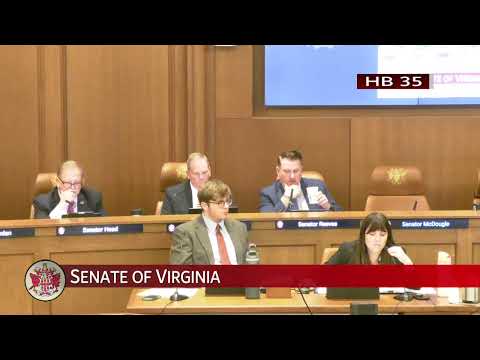
A Senate committee advanced a narrowed substitute of House Bill 35 that would limit consecutive isolated confinement to 15 days with safety exceptions, and asked the Department of Corrections to begin implementation work while lawmakers refine language on protections for people at high risk of assault.
A Senate committee on Thursday approved a scaled‑back substitute to House Bill 35 and asked the Virginia Department of Corrections (DOC) to begin preparations while the legislature refines the bill’s language. The substitute sets a 15‑day consecutive limit on isolated confinement while preserving existing safety exceptions and review procedures.
Supporters said the change preserves core reform goals while addressing operational concerns raised by DOC. “The substitute keeps the policy focused and workable while preserving the bill’s core reform,” Delegate Cole said as he described the replacement language and recent edits.
Senators pressed for stronger safeguards for people who face elevated risk of sexual assault in general population settings. “My concern is ensuring that someone who is highly likely to face sexual assault is believed and safely moved to a placement that protects them,” Senator Rome said, asking how the substitute would guarantee both safety and fair treatment.
Counsel noted the substitute contains exceptions allowing confinement when an incarcerated person "needs such confinement for his own protection," and also preserves an option for voluntary placement with informed consent. Lawmakers and counsel agreed to work on tightened language to address whether voluntary placement could become prolonged isolation and to clarify who documents and reviews safety determinations.
The committee also asked staff to standardize defined terms used in the substitute (for example, changing instances of “facility head” to the statutory term “facility administrator”) so the text aligns with existing statute and regulatory language. Advocates and senators highlighted the importance of review procedures and clear standards for when safety exceptions apply.
Rather than immediately reporting the bill out of committee, members voted to continue the measure and send a letter to DOC urging the agency to begin implementation planning and to engage with committee staff and advocates on technical fixes. The committee recorded its roll as it adopted the motion to continue and ask for DOC coordination.
The committee’s action keeps the legislation alive while lawmakers negotiate amendments aimed at strengthening protections for at‑risk individuals and ensuring the policy is operationally feasible.