Get Full Government Meeting Transcripts, Videos, & Alerts Forever!
Get email alerts on the Census Data Access topic
No spam. Unsubscribe anytime.
Census demographer Pamela Sardy walks through Population and Housing Unit Estimates website
Summary
Pamela Sardy of the U.S. Census Bureau demonstrates how to find intercensal and vintage population estimates, download tables and CSV data sets, use tools such as the population clock and QuickFacts, and access technical documentation and file layouts on the PEP site.
Pamela Sardy, a demographer statistician in the U.S. Census Bureau’s Population Division, guided viewers through the Population and Housing Unit Estimates (PEP) web pages in a recorded walkthrough.
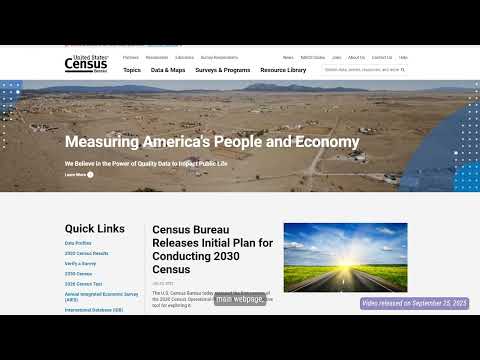
Sardy showed how to reach the PEP page from the Census Bureau’s main website or by entering the agency’s address directly, and highlighted the site’s main features: a population clock widget, featured links to data tables and data sets, an estimates release schedule, and special products such as demographic analysis and modified race data. "The population clock, which is like a car odometer, except instead of counting miles, it counts people," she said, describing how the widget simulates births, deaths and migration to approximate a real-time count.
The presentation emphasized two ways the site organizes data: human-readable tables for quick display and CSV data sets for programming and analysis. Sardy advised users to download the accompanying file layout PDF for each data set, which defines variables and other key information, and to consult the methodology page for method statements and release notes for estimates and special products.
Sardy highlighted the intercensal estimates page and explained its role: "these series are produced each decade by adjusting the existing time series of postcensal estimates to smooth the transition from one decennial census count to the next," and noted that once produced the intercensal series becomes the preferred series for that decade. She said the 2010–2020 intercensal totals are available on the site and that more detailed intercensal tables by age, sex, race and Hispanic origin were expected later in the year.
The walkthrough also covered vintage releases. Sardy pointed viewers to the vintage 2024 national population estimates totals as the most recent completed vintage and explained that a "vintage" denotes a time series of estimates that runs from the most recent decennial census through the vintage year. She said the Census Bureau typically retains the previous vintage (for example, vintage 2023) on the site until the new vintage is fully published but discourages combining estimates from different vintages in a single analysis.
Other resources Sardy demonstrated include the Data Tools page (which links to interactive applications created by Census Bureau staff), QuickFacts for quick comparisons across states, counties and places of 5,000+ population, TigerWeb for mapping vintage and 2020 census geographies, and an FTP2 repository where archived vintages, file layouts and method documents are hosted.
Sardy closed by reiterating that the PEP site is the definitive source for population and housing unit estimates and advised users with follow-up questions to contact the Coordination, Dissemination, and Outreach branch of the Population Estimates Program (contact details available on the site).