Get Full Government Meeting Transcripts, Videos, & Alerts Forever!
Get email alerts on the Education Executive Functioning topic
No spam. Unsubscribe anytime.
Chesapeake Public Schools counselor outlines executive-function strategies for families
Summary
At a Chesapeake Public Schools Family Empowerment webinar, Student Engagement and Resource Counselor Meredith Sargol described executive functioning as the brain's 'air traffic control system,' explained its three core pillars, and offered practical strategies—visual checklists, timers, 'body doubling,' chunking—and screen-time guidance for parents.
Meredith Sargol, a Student Engagement and Resource Counselor with Chesapeake Public Schools' Office of Student Conduct and Support, led a Family Empowerment webinar offering parents practical strategies to help children develop executive-function skills.
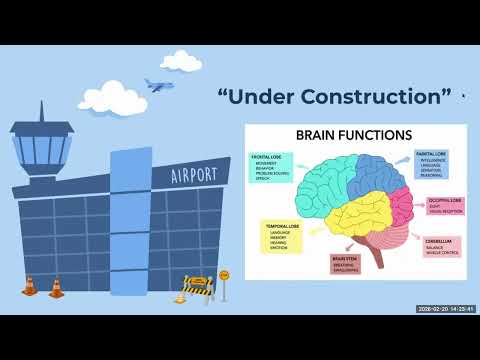
Sargol defined executive functioning as "the air traffic control system of the brain," and said it rests on three pillars—working memory, cognitive flexibility and inhibitory control—that are learned over time rather than inborn. "If you learn nothing else from this webinar," she said, "executive functioning is not an innate skill. We are not born with it." She told families these skills are central to attention, planning and self-regulation, and said research links strong self-regulation to later academic and life success.
She walked parents through an in-session simulation meant to approximate common breakdowns in working memory and attention, then described concrete classroom- and home-based supports. Recommended tools include visual task lists (preprinted step lists, movable-picture whiteboards and toggle checklists), time timers and clock schedules, and breaking projects into smaller, observable steps. On task initiation, Sargol suggested "body doubling"—an adult sitting and working nearby—using a five-minute start rule to build momentum, and chunking larger assignments.
On behavior and emotion support, Sargol emphasized modeling regulation first and "connection before content," advising parents to acknowledge feelings, offer two regulated choices and use sensory supports (a drink, a hug or a brief break) before teaching the desired behavior. "The way parents treat each other is even more powerful for a child's development of self-regulation than the way the parents treat the child," she said.
Sargol also addressed screen time, saying research suggests excessive early exposure can undermine attention and emotional regulation. She recommended no screens for children under 2, noted that "for kids two to five, an hour a day is typically what is recommended," and encouraged co-viewing, quality programming, parental controls, tech-free times and charging devices outside bedrooms to protect sleep.
The district promoted further resources: the Peake Parent University course catalog, pre-recorded webinars and the "Let's Talk" two-way communication tool. FACE (the Office of Family and Community Engagement) provided contact information (face@cpschools.com) for follow-up questions.
The webinar focused on practical, teachable strategies rather than diagnoses or individualized clinical guidance; Sargol noted that children with ADHD, autism or other conditions "need additional supports" but can still learn executive skills with consistent practice. The session concluded with reminders that building these abilities is a long-term process and that parents serve as an essential "ground crew" in helping children gain independence.