Get Full Government Meeting Transcripts, Videos, & Alerts Forever!
Get email alerts on the Agriculture Feedlots topic
No spam. Unsubscribe anytime.
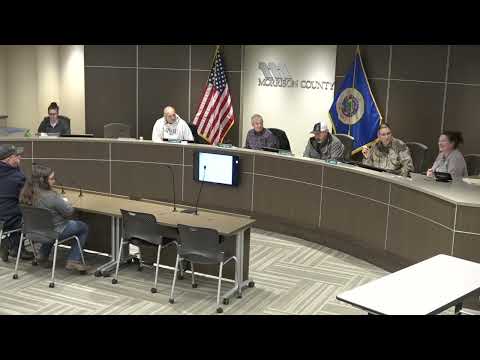
Morrison County board approves variance to split Hillman swine barn despite odor complaints
Summary
The Morrison County Board of Adjustment on Feb. 17 approved a variance allowing a Tier‑3 swine barn to be split onto a separate parcel in Hillman; the barn will remain 37 feet inside a required residence setback and 42 feet inside a side‑property setback. Neighbors raised odor concerns; the board emphasized existing conditional‑use requirements will continue to apply to any new owner.
The Morrison County Board of Adjustment voted to approve a variance that allows a Tier‑3 swine operation near Hillman to be split from an adjacent residence and sold, despite neighbor complaints about manure odor.
Land services staff told the board that Donald and Deborah Hayes are requesting two variances tied to a planned parcel separation: the residence on the west parcel would become a non‑feed‑lot residence but would sit 1,283 feet from the swine barn — 37 feet short of the county's 1,320‑foot required setback — and the barn would sit 158 feet from the west side property line, 42 feet short of the 200‑foot requirement. Staff cited County Ordinance section 120.1 as the controlling standard.
"This is a registered tier three feed lot," Amy, a land services staff member, said in her report, and she read two pre‑hearing public comments describing persistent odor during manure pumping and surface application. One commenter said the odor becomes "nearly unbearable" on certain days and urged immediate incorporation or injection of manure to reduce nuisance.
Applicant Don Hayes and his wife, Debbie, told the board the barn will be sold and that the current operation has used dragline and injection methods. "Last spring the manure was injected directly into the ground," Don Hayes said, and drew attention to prior coordination with the Minnesota Pollution Control Agency. The prospective new owners, Katie and Kyle Meyer, told the board they planned either to have a manure buyer haul the material off site or to use a dragline to move it to other fields.
Amy reminded the board that the property remains subject to an existing conditional‑use permit and the "good neighbor" plan, stormwater management and odor‑minimization measures attached to that permit. "The new owner is going to be beholden to the conditional‑use permit that's already granted," Amy said, and recommended that any new owner consult the county feed‑lot officer.
Board members discussed the variance criteria in detail. Several members said the encroachments were small in absolute feet and noted the nearest other residence meets setback requirements; they also cited the operation's multi‑year history and comprehensive‑plan goals supporting continued agricultural use. One member observed that the 37‑foot encroachment is to another feed lot, for which the county does not require a setback.
After deliberation the board moved and seconded approval; the motion passed on the record. Chair instructions to the applicants included a direction to work with land services on implementation and to ensure the conditional‑use permit requirements remain satisfied by any new owner.
What happens next
The board approved the variance and directed the applicants and prospective new owners to coordinate with Land Services and the county feed‑lot officer to ensure ongoing compliance with the conditional‑use permit, stormwater and odor‑minimization plans. The approval does not change the county's conditional‑use requirements and does not reopen the conditional‑use permit; any future changes to those permit conditions would require separate proceedings or a direct nexus to the encroachment.