Get Full Government Meeting Transcripts, Videos, & Alerts Forever!
Get email alerts on the Phmsa Reauthorization topic
No spam. Unsubscribe anytime.
Subcommittee opens hearing on PHMSA reauthorization, chair outlines five-year draft and safety priorities
Summary
The Energy Subcommittee opened a hearing to review a discussion draft to reauthorize the Pipeline and Hazardous Materials Safety Administration (PHMSA) for five years, focusing on regulatory streamlining, stronger penalties, voluntary information sharing, and state damage-prevention best practices.
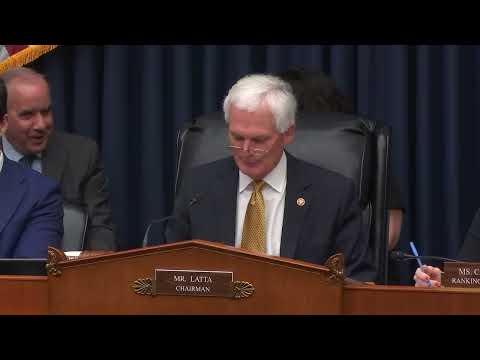
The chair opened the Energy Subcommittee hearing to review a discussion draft that would reauthorize the Pipeline and Hazardous Materials Safety Administration for five years and to hear from PHMSA leadership on agency priorities.
The chair said the hearing's witness, "the Honorable Paul Roberti, the Administrator of the Pipeline and Hazardous Materials Safety Administration," was invited to update the subcommittee and that his "perspective will inform our legislative effort." The chair emphasized PHMSA's role as an agency within the U.S. Department of Transportation that develops and enforces federal safety regulations for the nation's pipeline infrastructure and hazardous materials transportation.
Why it matters: The chair framed the draft as a modernization effort aimed at maintaining safety while enabling the safe expansion of pipeline infrastructure the committee said is central to energy reliability. He noted states play a substantial role in enforcement and oversight, calling them "boots on the ground" for inspections across what he described as more than 3.3 million miles of liquid and gas pipelines and saying states carry out enforcement for about 85% of PHMSA safety authority.
Key provisions outlined in the opening statement included reauthorizing PHMSA for five years; removing duplicative regulations that "do not improve safety"; clarifying that cost-benefit analysis should focus on safety; reducing regulatory red tape for special permit programs; strengthening penalties for pipeline safety violations that impair operations; establishing a voluntary information-sharing program for pipeline operators; and encouraging state damage-prevention programs to adopt best practices to reduce the leading causes of pipeline damage incidents.
The chair placed the discussion in the context of rising energy demand, saying the United States "is at a turning point" and citing witnesses who have urged more energy delivered safely and efficiently. He also characterized some opposition to pipeline expansion as political, saying "for too long, sound pipeline safety policy has been [opposed by] the environmental left intent on stymieing the pipeline expansion." No response to that characterization appears in the opening statement excerpt.
The hearing formally welcomed Administrator Paul Roberti as the subcommittee's witness and concluded the opening remarks with the chair saying he looks forward to working with pipeline operators, stakeholders, and members on both sides of the aisle to advance legislation focused on safety oversight.
Next steps: The chair said the subcommittee will review the discussion draft before it and use the hearing to inform legislative work; no votes or formal actions were recorded in the provided excerpt.