Get Full Government Meeting Transcripts, Videos, & Alerts Forever!
Get email alerts on the Probation Services topic
No spam. Unsubscribe anytime.
Tazewell County board hears overview of probation operations and caseloads
Summary
At a Nov. 19 meeting, a representative of the Office of Court Services briefed the Tazewell County board on probation responsibilities, distinguishing probation from parole and citing about 2,200 supervised cases, staffing levels and program activity including 14,000 office visits and 12,000 drug tests last year.
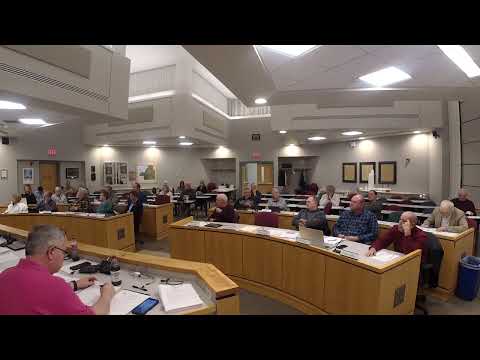
Tazewell County board members heard an overview of local probation operations Wednesday evening from Mr. John, a representative of the county's Office of Court Services.
Mr. John told the board that court services — commonly called probation — is part of the judicial branch and is distinct from parole, which is managed by the Department of Corrections. "We're not parole," he said. "Probation is under the judicial branch and as such we receive our funding through the Supreme Court." He said probation keeps people in the community under court-ordered conditions, while parole involves community supervision after release from a penitentiary.
The presentation outlined the department's caseload and staffing. Mr. John said the office manages about 2,200 cases in total, with roughly 700 considered active probation cases across juvenile and adult populations. He said the department employs about 30 staff, including 20 officers who carry most of the supervision caseload.
Mr. John described a recent update to the office's mission and vision — replacing a 25-year-old statement — which he said was developed with staff to emphasize transparency, collaboration and coaching. He said the department follows evidence-based practices, including actuarial risk-and-needs assessments that set supervision intensity and guide targeted interventions to reduce recidivism.
"If we don't score assessments properly, everything we do after that can be missed," Mr. John said, explaining the role of assessments in determining contact frequency and services. He described the shift from informal office check-ins to structured case planning that can include referrals to substance abuse, mental-health and domestic-violence treatment.
Mr. John gave activity numbers to illustrate workload and operations: about 14,000 office visits and roughly 7,000 home visits last year, along with approximately 12,000 observed drug tests. He said the office maintains an in-house analyzer and staff trained to process specimens and review results.
On juvenile matters, Mr. John said probation staff play a gatekeeping role: when a juvenile arrest is considered for secure detention, officers or on-call supervisors use a research-based screening instrument to decide whether the youth should be detained or released that evening. He said staff provide 24/7 on-call coverage for those determinations.
Chairman Brim opened and closed the segment, calling the board to order and noting quorum at the start of the meeting. The presentation was informational; no votes or formal actions on probation policy or funding were recorded during the portion of the meeting captured in the transcript.