Get Full Government Meeting Transcripts, Videos, & Alerts Forever!
Get email alerts on the Land Use Subdivision topic
No spam. Unsubscribe anytime.
Plan Commission approves Richland Square primary plat despite nearby residents’ drainage concerns
Summary
Ellisville’s plan commission approved primary plat PC26-7 to subdivide 12.4 acres into four commercial lots for Richland Square, while residents urged immediate fixes for new flooding tied to a clogged drain; staff said drainage will be handled at site-development review.
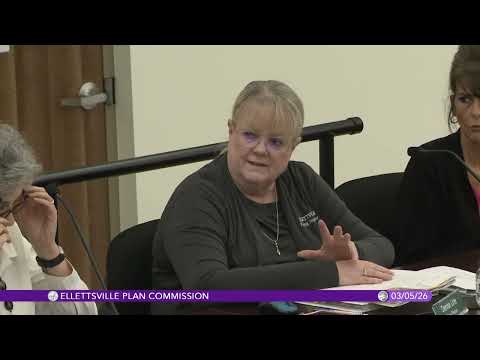
The Ellisville Plan Commission on March 5 approved primary plat PC26-7 to subdivide the Richland Square Section 2 property into four commercial lots totaling 12.4 acres, despite public testimony about new flooding on nearby residential property.
Planning staff recommended approval, saying the proposed primary plat meets Unified Development Ordinance requirements and noting previous variances granted by the Board of Zoning Appeals for reduced setbacks. Staff asked the commission to determine screening to be placed in the rear-yard setback and cited Unified Development Ordinance Section 4.5, which requires a 20-foot minimum buffer yard with specified tree and shrub plantings for Commercial 2 zoning.
Todd Borgman, of Smith Design Group, identified himself as the project engineer and told the commission the lots are for sale and that no immediate site plans exist. “When individual corporations come in and decide to develop those properties, the drainage concerns will be addressed at that time,” Borgman said, adding that the retention pond will be enlarged and a retaining wall installed as part of future site development.
Several residents told the commission they have experienced new flooding since work on a nearby retention pond. Candy Burkeholder, who said her property backs up to the proposed subdivision, said recent rains caused water to enter a pole barn she has owned for 15 years and offered to provide photos. “We have flooding in our back property whenever it rains,” Burkeholder said, asking what can be done before development occurs.
Residents and the petitioner described a drain pipe running through the rear of properties that residents say is clogged or broken. Borgman said the pipe is on the petitioner’s parcel and that clogging from leaves has contributed to backups; he told the commission he does not believe developer activity has increased the problem. County staff had inspected but, participants said, had not yet resolved the issue.
Staff and the commission repeatedly emphasized that primary-plat approval governs the lot configuration and does not authorize or substitute for a development plan review, when stormwater controls and retention improvements would be required. The commission’s motion to approve the primary plat carried on a roll-call vote as recorded in the meeting transcript.
What happens next: approval of the primary plat allows the four lots to be recorded as parcels; any construction, parking, drainage improvements and required buffer planting will be reviewed and permitted at the site-development stage.
Votes and procedure: the motion to approve PC26-7 was moved, seconded and carried by roll call as entered in the meeting record.