Get Full Government Meeting Transcripts, Videos, & Alerts Forever!
Get email alerts on the Tax Defaulted Sales topic
No spam. Unsubscribe anytime.
Auditor warns of $2.1M in over‑distributions from deficit tax sales; board seeks multi‑year recovery options
Summary
Auditor Controller Genevie Harrington told the Lake County Board that hundreds of 'deficit' tax sales of low‑value parcels produced over‑distributions to other agencies totaling about $2.1 million, and proposed a multi‑year repayment plan; affected districts and cities said they were not warned earlier and urged clearer, faster calculations and better communication.
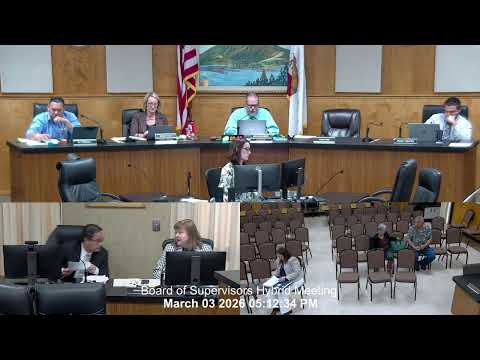
County Auditor Controller Genevie Harrington and tax staff briefed the Board of Supervisors on a multi‑year problem arising from 'deficit' tax sales, a technical outcome of auctioning many low‑value or paper‑subdivision parcels when sale proceeds fall short of total taxes and a variety of direct charges.
Harrington said the county’s property‑tax software records a successful bidder and marks a parcel redeemed even when sale proceeds are far below the total liens and direct charges on that parcel. That creates a technical over‑distribution to agencies that the auditor’s office must later recover through a negative apportionment (sometimes called a clawback). "This is the normal process," she said, but Lake County is unusual because of the volume of low‑value parcels and the scale of direct charges added by third parties. The county has identified roughly $2.1 million in amounts that were effectively overpaid and are subject to recovery.
Tax staff explained several compounding factors: (1) the county issues tax bills on small assessments and allows direct charges to be added (for abatement, cleanup, special assessments), (2) many parcels are 'upside down'—auction bid levels must be reduced to attract a buyer, creating deficit sales, and (3) the software (Megabyte) does not automatically account for deficits in a way that prevents premature disbursement to agencies. Staff said manual corrections are necessary, and when those corrections are not completed before distributions, the system will push funds out that later must be reclaimed.
Harrington proposed a repayment approach modeled on state audit correction practice: a multi‑year repayment plan (the auditor suggested a three‑year schedule, and the board asked staff to consider up to five years where reasonable). She emphasized staff are still calculating per‑parcel adjustments and that more recent auctions had smaller deficit totals but that three earlier tax sales (numbers 160–162) produced the majority of the problem. The auditor estimated about 257 parcels generated deficits across recent sales and that the county is still reconciling individual calculations.
Special‑district managers and municipal officials told the board they learned of possible clawbacks only recently and called for better advance notice and more gradual repayment terms. "We're going to be severely impacted by this," said a water‑district manager who said a $95,000 repayment over three years would substantially strain a small district’s five‑year rate plan.
Staff and board discussed longer‑term fixes including adopting a low‑value ordinance (which would change the universe of what is billed and sent to auction), pursuing software fixes with Megabyte or a module to handle deficit sales, increasing staffing to process manual corrections more quickly, and improved communication to impacted agencies to avoid unanticipated fiscal shocks.
Why it matters: The negative apportionment process reallocates funds that many fire districts, water districts and other agencies have already budgeted; sudden recovery demands can create material budget holes for small special districts that rely on predictable property‑tax revenue.
What’s next: The board asked staff to return with concrete options to shorten the timeline, to assess staffing needs or alternatives, and to provide a repayment plan framework (board asked staff to consider three‑ to five‑year repayment schedules) and improved outreach to affected agencies before distributions occur.