Get Full Government Meeting Transcripts, Videos, & Alerts Forever!
Get email alerts on the Fleet Management topic
No spam. Unsubscribe anytime.
Council tables proposal to lease two police vehicles after data and cost concerns
Summary
Shenandoah councilmembers debated a proposed two-vehicle lease, raising concerns about incomplete fleet data, opaque leasing fees and market effects of large leasing firms; council voted to table the measure pending more detailed utilization and cost information.
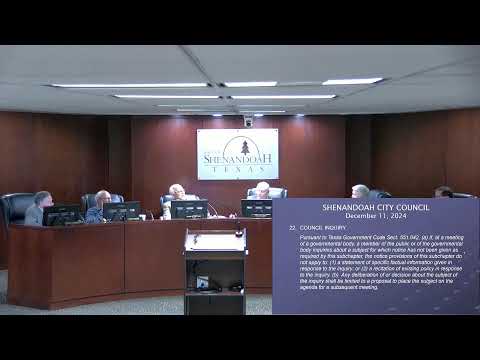
Shenandoah City Council on Dec. 11 voted to table a proposed lease of two police vehicles after extended discussion about data gaps and the long-term costs of leasing.
Councilmembers said the city lacks reliable fleet metrics — including consistent service, mileage and engine-hour records — needed to compare leasing with outright purchase. Councilman Raymaker pressed for more complete utilization and maintenance data, saying the spreadsheets available showed only two years of partial records and omitted metrics such as fuel use and engine hours.
Montgomery County budget officer Amanda Carter, who joined the meeting to share her agency’s experience, told the council that county staff had evaluated leasing and “we did not find that it for us; it didn’t work,” adding that their county attorney declined proposed contract terms in prior reviews. That account reinforced calls from multiple members to pause the decision until staff can produce multi-year cost and utilization reports and clear comparisons of lease versus purchase.
Members also raised concerns about market effects and fees. One councilmember warned that large leasing firms could “monopolize access” to limited vehicle inventory and drive up prices; others noted capitalized fees and courtesy-delivery charges disclosed in the lease quotes that were not fully explained on the record.
Police leadership described the proposal as a pilot for administrative vehicles (chief and lieutenant units) rather than patrol cars; staff said budgeted funds are available to buy some vehicles outright and that the council had previously approved purchasing three Tahoes in the current budget. The chief also explained that some existing vehicles have exceeded useful life, citing repeated engine replacements and high repair risk.
After discussion, a motion to table the item so staff can collect better data and return with a clearer recommendation carried.
What’s next: Staff will compile multi-year utilization, maintenance and engine-hour data, provide clearer cost comparisons for lease versus purchase, and return the item to a future council meeting.