Get Full Government Meeting Transcripts, Videos, & Alerts Forever!
Get email alerts on the Special Districts Governance topic
No spam. Unsubscribe anytime.
City manager and residents call for oversight after Clear Lake sewage spill and outstanding special-districts invoices
Summary
City manager Alan Flores and multiple residents urged Lake County to improve oversight of special districts following a January sewage spill, reported unpaid invoices for road-related manhole adjustments, and alleged long-running mismanagement of utilities and spending.
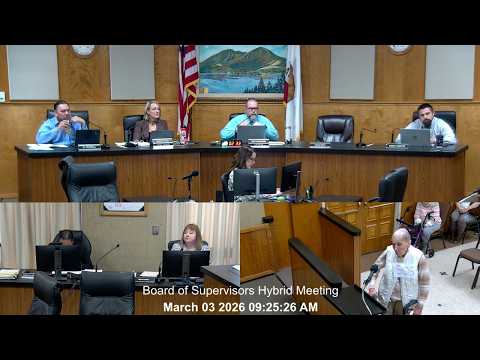
Alan Flores, city manager for the City of Clear Lake, and multiple residents used the public-comment period to call for greater oversight and transparency of Lake County special districts in the wake of a January sewage spill and other operational problems.
Flores said the city and the county's special districts have experienced "conflicts or disagreements" over the Southeast treatment system and that a previously negotiated agreement related to an affordable-housing project appears to have changed, creating uncertainty for the developer. He also said that after roughly 20 miles of road improvements in 2024, several manholes owned by special districts required adjustments and that the districts had not paid invoices for that work. Flores stated that Lake County special districts currently owe the city a balance he described in the record as "$882,58.77" and urged the board to treat other government agencies fairly in payment of obligations.
Several public speakers pressed for accountability and better planning. Cassandra Halbert, a Robin Lane resident, framed the January spill as evidence of deeper problems: aging infrastructure, deferred maintenance, a lack of a public capital improvement plan (CIP), and inconsistent communication with residents. "This exposed deeper systemic concerns," Halbert said, and she urged the board to require a formal, publicly available CIP, clear reporting structures, and measurable corrective benchmarks.
An online commenter identified as Sterling alleged long-term mismanagement in special districts, questioned reported spill volumes and asked where grant and other revenues were spent; the speaker said county taxpayers have been asked to cover mistakes rather than using fines or corrective actions to unlock grant funding for cleanup.
Albert Coats, capacity management operations and maintenance coordinator for special districts, offered a different tone in part, praising administrator Robin Boret and district staff for support and saying he has been given space to address operational challenges since joining 14 months ago.
No formal board action, vote or motion was recorded during the public-comment period. Speakers asked the board to pursue a thorough evaluation of special-district administration, to ensure transparent reporting of infrastructure conditions and finances, and to implement oversight mechanisms to reduce the risk of future spills and unexpected taxpayer costs.
What happens next: commenters requested a formal evaluation and clearer reporting; no timeline or board directive was recorded during public comment.