Get Full Government Meeting Transcripts, Videos, & Alerts Forever!
Get email alerts on the Backyard Chickens topic
No spam. Unsubscribe anytime.
Planning board recommends ordinance to allow backyard chickens with 100-permit cap
Summary
The Palm Coast Planning & LDRB voted to recommend a city ordinance to allow backyard chickens, capping permits at 100 citywide, limiting four hens per single-family parcel, requiring a manure-management class and a $50 permit; staff said the pilot had 25 applications and few complaints.
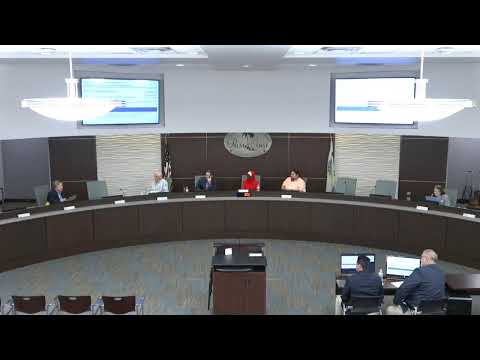
The Palm Coast Planning and Land Development Regulation Board on Nov. 19 recommended that city council adopt an ordinance to allow backyard chickens under a capped, regulated program.
Staff presented the proposed ordinance, which would create a new Chapter 8, Article 3, Section 8-100 in the Palm Coast Code of Ordinances and amend the Unified Land Development Code. Barbara Gman, co-enforcement manager, said the pilot program generated about 25 applications and ‘‘has experienced a low participation rate and has received a couple of complaints.’’ She told the board two pilot permits expired and therefore were not issued.
The ordinance would limit backyard-chicken permits to 100 citywide on a first-come, first-served basis, allow a maximum of four hens per single-family residential parcel, and require applicants to complete a class on raising chickens that includes a manure-management component. The proposal would also require an online application, a $50 permit fee, an on-site inspection by an animal-control officer prior to permit issuance, and fly-tight containment for manure. Coops and runs must meet the code’s setback and size rules and the site plan must be submitted with proposed setbacks.
Board members asked staff about enforcement costs and reported complaints. Gman said staff found only a small number of follow-up inspections during the pilot and that the $50 fee was set when the program was created to cover online processing and verification tasks. She outlined enforcement steps: initial notice and opportunities to cure followed by code-board hearings and progressively increasing fines or liens if violations are not addressed.
There was no public comment during the meeting’s public-comment period for this item. The board made a motion to accept staff’s recommendation and, on roll call, Board members Decker, Hilton/Helton, Ferguson, and Chair Shank voted yes; the motion carried.
The board’s recommendation forwards the ordinance to city council for first reading on Dec. 2 and a second reading on Dec. 16. The ordinance text presented to the board described the program cap, the four-hen limit, the $50 fee, required training and manure controls, and the inspection process; council will consider adopting the permanent land-development-code language.