Get Full Government Meeting Transcripts, Videos, & Alerts Forever!
Get email alerts on the Municipal Finance topic
No spam. Unsubscribe anytime.
Finance & Budget Committee advances up to $31M bond authorization to council
Summary
The Evanston Finance & Budget Committee voted 7–1 to advance staff’s recommendation asking the City Council to authorize up to $31 million in general obligation bonds to reimburse recent capital spending and fund water and library projects; members urged careful timing, attention to reserves and clarified reimbursement limits.
The Evanston Finance & Budget Committee voted 7–1 on March 4 to forward a staff recommendation asking the City Council to authorize up to $31 million in general obligation bonds to reimburse and fund capital, water and library projects.
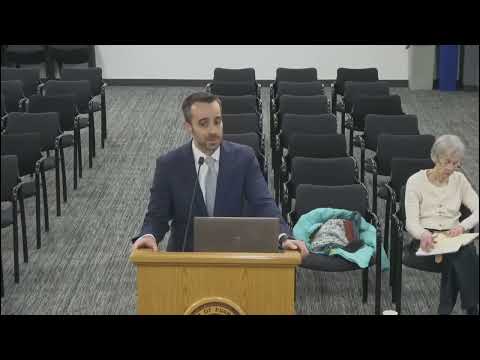
City finance staff and the city’s municipal adviser laid out the proposal at the meeting. Clayton Black summarized the request as a combination of two elements: roughly $27 million to reimburse capital improvement projects from 2024–25 and about $3 million for water projects, plus roughly $1 million for a library roof repair, for a total staff request of $31 million. "We're recommending that the finance and budget committee provide direction on $27 million in funding for '24 and '25 projects," Black said, noting that about $18 million of that has already been spent.
Anthony Miselli, the city’s financial adviser from Spear Financial, framed the question about timing and market conditions. He told members that on a conservative run earlier this year the city had been looking at "about 3.8% for a 20‑year issue," while cautioning that market events can change pricing during the 2–3 months it typically takes to go to market.
Committee members generally supported using long‑term debt for long‑lived assets but pressed staff on the city’s cash position and legal timing constraints. Black said the city had about $122.9 million of outstanding general obligation principal against a self‑imposed debt limit of $155 million and that the capital improvement fund showed a negative true cash balance of about $11.5 million at the end of 2025. He also pointed out that some costs may be excluded from tax‑exempt reimbursement because the Internal Revenue Service timing rules require issuance within 18 months of incurring or placing an asset in service.
Council Member Kelly, who voted against advancing the request, said she was "a little uncomfortable with the $30 million" (the motion as introduced) without clearer figures on how much of older spending is within the 18‑month reimbursement window and a more complete picture of all fund reserves. Staff said they would provide updated cash figures and confirm which reimbursable expenditures meet the 18‑month rule when the item goes to council.
The committee approved the staff recommendation to advance the ordinance (moved by Council Member Nusma, seconded by Council Member Kelly) and will forward the legislation to the City Council for introduction and adoption over two meetings. The committee recorded seven votes in favor and one opposed. Final sale amounts will be determined by staff and the municipal adviser; staff said the city can issue less than the ceiling without returning to council but cannot exceed it without further council action.
What's next: if advanced by the committee, staff expect to present a bond ordinance to the City Council for first reading in late March or early April; actual sale timing will aim to balance market conditions, the city’s cash needs and the reimbursement deadline for prior expenditures.