Get Full Government Meeting Transcripts, Videos, & Alerts Forever!
Get email alerts on the Health Data topic
No spam. Unsubscribe anytime.
Committee approves bill to create statewide health data utility housed at LRC
Summary
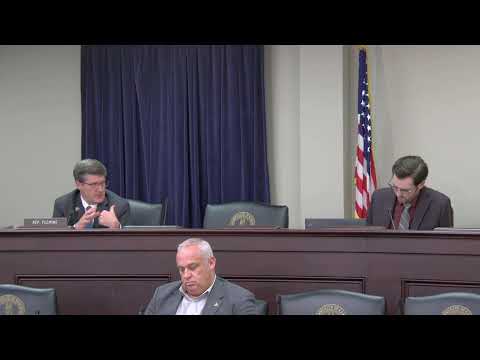
A committee substitute for HB 676 won favorable expression; it would create a statewide health data utility to aggregate fragmented health data, house it at the nonpartisan Legislative Research Commission (LRC), and support policymaking. Some members urged restoring university consortium representation and stronger mandatory data-collection language.
Representative Rebecca Rymer described a committee substitute for House Bill 676 to establish a statewide health data utility to securely aggregate health data so policymakers, researchers and patients can better understand system performance. "This bill creates the infrastructure needed to responsibly analyze the data so we can identify gaps in care, reduce duplicative services, and improve patient outcomes," Rymer told the committee.
Sponsors said the committee substitute places the utility within the Legislative Research Commission to ensure nonpartisan stewardship and makes the new entity responsible for developing the data infrastructure. Representative Wilner and others expressed concern that the substitute removed a named consortium of public-health colleges and shifted implementation from mandatory to optional authority, and asked whether the original language could be restored to ensure ongoing data flows and formal stakeholder participation.
The sponsor said the substitute was intended to provide the LRC authority and flexibility to develop partnerships with university partners and that those relationships could be established through rulemaking. After discussion and several members' expressed willingness to continue working on composition and implementation language, the committee passed the substitute with favorable expression.