Get Full Government Meeting Transcripts, Videos, & Alerts Forever!
Get email alerts on the Medicaid Payments topic
No spam. Unsubscribe anytime.
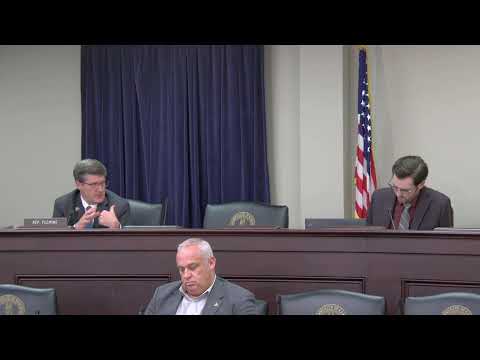
House health committee backs Medicaid directed payments to bolster rural physician support
Summary
The committee approved HB 689 to let Kentucky pursue a CMS-approved Medicaid state-directed payment program for physician and non-physician services through qualifying hospital-affiliated groups, an initiative sponsors said could bring about $29 million in federal funds annually and would tie payments to state quality metrics without using general fund dollars.
Representative Amy Neighbors, sponsor of House Bill 689, told the House Standing Committee on Health Services that the bill would authorize Kentucky to seek federal approval to implement a Medicaid state-directed payment program for physician and non-physician professional services delivered through qualifying hospital-affiliated groups.
"House Bill 689 provides the statutory authority for Kentucky to implement a Medicaid state-directed payment program," Neighbors said, and said the program could start Jan. 1, 2026 with retroactive payments for that calendar year. She told the committee the goal is to "strengthen access to care for Medicaid patients, especially in rural and underserved communities, while supporting physician workforce retention and aligning reimbursement with quality outcomes." The presentation estimated the program could generate approximately $29 million per year in additional federal Medicaid dollars and would not require general fund revenue.
Hospital witnesses described why the policy matters locally. "We are a rural health system," said Russell, the CFO at Owensboro Health, explaining that his system subsidizes physician recruitment and has seen Medicare fee-schedule pressure while costs rise. "Medicare fee schedule ... has actually reduced by 7 and a half percent since 2020," Russell said, arguing the directed-payment authority would help preserve access in his service area. Dr. Heidi Merly, representing St. Elizabeth Healthcare, said participating providers would be required to meet state-identified quality metrics such as cancer screenings, depression screening, diabetes control and opioid stewardship.
Committee members asked whether the federal dollars would require a state match and whether private practices could participate. Witnesses said university partners and teaching-hospital affiliation influence match and participation and that the program is aimed primarily at hospital-affiliated and teaching-hospital providers rather than standalone private practices.
After questions, the committee moved and took a roll call. House Bill 689 passed the committee with favorable expression. Sponsors noted the bill will also proceed to MOAB for additional review and clarification, and the chair said the measure "should pass on the House floor."