Get Full Government Meeting Transcripts, Videos, & Alerts Forever!
Get email alerts on the Tourism Tbid topic
No spam. Unsubscribe anytime.
Folsom council leaves T‑BID increase open while hotels seek phased, governed approach
Summary
Council opened a public hearing on raising the tourism business improvement district (T‑BID) assessment from 4% to 8%, received conditional protest-withdrawal letters from several hoteliers asking instead for phased increases and stronger governance, and voted to continue the hearing to allow negotiations and clarification of oversight.
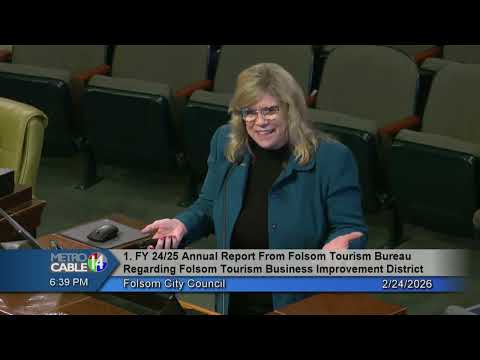
The Folsom City Council on Feb. 24 opened a public hearing on a proposed increase in the tourism business improvement district assessment and agreed to continue the hearing to allow time for hotel owners and staff to negotiate governance and implementation details.
The proposal under consideration would raise the T‑BID assessment rate from 4% to 8%. City staff read communications from five hotel owners opposing a straight doubling of the assessment, proposing instead either a phased approach (4% to 6% in years one and two, with the remaining 2% in years three and four) or a straight 6% increase coupled with a “clearly‑defined governance and accountability framework” that ensures hotels have meaningful oversight and measurable return on investment.
The letters said, “We remain opposed to any increase of the T‑BID assessment rate from 4% to 8%. Doubling the assessment would represent a material and immediate financial burden on lodging operators,” and asked the city for a 60‑ to 90‑day collaborative working period to craft a more measured plan. City attorneys told the council those conditional retractions can be submitted up until the close of the public hearing and, if accepted by council action to continue, would change which protests are counted in the statutory tally.
Council members debated whether to close the hearing and accept the existing protests — which could defeat the proposal — or to keep the hearing open so negotiations could proceed. John Lambeth, who helped draft the enabling legislation, told the council the conditional withdrawals are common in assessment‑district protests and urged more time to reach an agreement. Visit Folsom also asked for the continuance to work through governance and spending concerns.
After extended discussion about process and timing, the council voted to continue the public hearing to the second meeting in April to give staff, hotel owners and Visit Folsom time to refine the pace of implementation and the governance framework. The roll call on the continuance was 4–1, with Councilmember Aquino voting no.
What happens next: staff said the continuance will allow parties to produce governance details, benchmarks tied to occupancy and revenue performance, and clearer fiscal safeguards. If hotels formally withdraw their protests in writing before the reopened hearing, the council could then proceed with the revised proposal; if not, existing protests would remain in effect and could block adoption. The council and staff emphasized they will present any negotiated changes publicly before any final vote.