Get Full Government Meeting Transcripts, Videos, & Alerts Forever!
Get email alerts on the Education Funding topic
No spam. Unsubscribe anytime.
Sumner County officials explain how TISA changes school funding and what it means locally
Summary
District leaders outlined TennesseeInvestment in Student Achievement (TISA), describing base funding, student "weights" for special needs and English learners, direct and outcomes funding, and how state/local shares affect district budgeting and county maintenance-of-effort calculations.
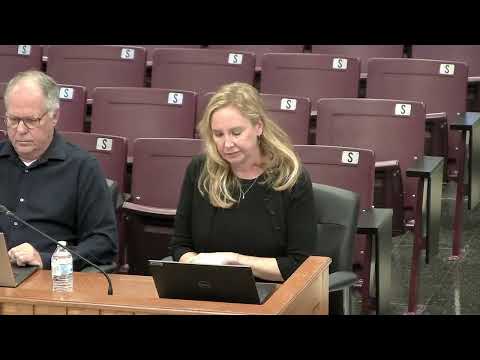
Dr. Langford, speaking at the Oct. 1 Sumner County School Board study session, gave a detailed overview of TennesseeInvestment in Student Achievement (TISA), the student-based formula that replaced the decades-old resource-based funding model.
"TISA is Tennessee Investment in Student Achievement; it changes the game," Dr. Langford told board members, saying the state now funds most categories on a per-student basis. He explained the formula comprises a base amount (about $7,075 per student for Sumner County), weights that increase funding for students with greater service needs, direct funding (K-3 literacy, fourth-grade literacy supports, Career and Technical Education and assessment costs) and outcomes funding tied to proficiency measures.
Dr. Langford said the district generated roughly $41.3 million last year in weight funding and received about $16 million in direct funding; outcomes funding paid out close to $3 million. He emphasized that outcomes funding is fluid: the state places dollars in a pot, evaluates which districts meet metrics and divides the available funds accordingly.
The superintendent walked the board through how local contribution is computed and the state/local split. For base and weight funding the statewide split is 70% state, 30% local; the state pays 100% of direct and outcomes funding. Dr. Langford warned that TISAcould push property tax conversations in smaller counties where local contributions sit near maintenance-of-effort thresholds, but said Sumner County is currently well above the minimum maintenance-of-effort level and unlikely to require immediate county revenue increases.
Board members asked how specific students are coded under the weights system. Staff said only services recorded in the state coding system generate weight dollars and that the state limits how many service categories are counted per student (for example, districts may decide which four of multiple service codes to include). The board also pressed on timing and cash flow: staff explained outcome funding is disbursed in runs (last year there was a December run and a February run for late-reporting metrics) and otherwise arrives monthly.
On teacher raises and state-directed dollars, Dr. Langford reiterated that a governor-announced percentage (for example, a 5% raise) is distributed via the formula and does not translate automatically into a uniform 5% increase for every teacher locally. "Rarely will the actual funding meet 5%," he said, describing the transparency benefits of TISA even as the district continues to reconcile formula dollars with local pay priorities.
Dr. Langford said the district will post a TISA accountability report before the full meeting and invite public comment before the board votes on the accountability report. He also noted that budget planning this year will focus on using outcome and weight dollars strategically, including potential local incentives to reward school excellence and investments in areas such as STEM and career coaches.
The presentation closed with staff commitments to publish detailed reporting and annual breakdowns per federal and state requirements and to return with an accountability report for board action at a later meeting.