Get Full Government Meeting Transcripts, Videos, & Alerts Forever!
Get email alerts on the Livestock Law topic
No spam. Unsubscribe anytime.
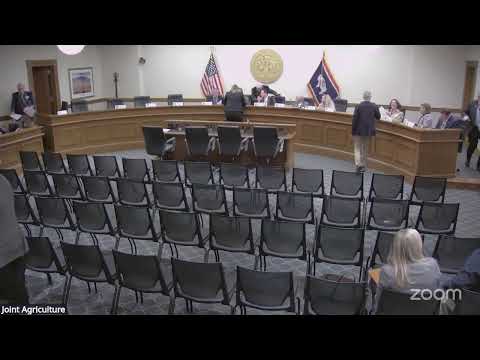
Lawmakers mull tougher 'fence‑out' enforcement and clarification of livestock identification rules
Summary
Senators and representatives discussed whether Wyoming should add enforcement authority for repeat 'fence‑out' offenders and revisit a prior law (HB229) that allows producers to choose livestock identification methods amid new federal tagging rules.
Senator Pearson proposed that the committee revisit Wyoming's fence‑out rules and consider giving sheriffs or other authorities clearer ability to act against repeat livestock offenders who repeatedly allow animals to stray and damage neighbors' property. "Landowners shouldn't have to manage other people's livestock," Pearson said, asking whether a threshold of repeat offenses should trigger action.
Members cautioned that livestock types (for example, sheep vs. cattle) and differing local practices complicate one‑size‑fits‑all enforcement. Representative Stro warned that changing fence‑in/fence‑out rules could have uneven effects and urged careful consideration.
Pearson also raised separate but related concerns about livestock identification. She cited 2021 HB229, which affirmed producers may identify livestock as they choose, and said new federal identification/tagging technologies are constraining veterinarians who must vaccinate and identify animals for interstate movement. "Our vets feel all tied up in this," she said, urging an interim update on where identification laws and federal requirements currently stand and asking that metal tags remain available as an option.
The committee agreed the topics—enforcement mechanisms for fence‑out and the intersection of state law with federal tagging rules—deserve interim review with both law‑enforcement, livestock, and veterinary stakeholders invited.