Get Full Government Meeting Transcripts, Videos, & Alerts Forever!
Get email alerts on the Humanitarian Access topic
No spam. Unsubscribe anytime.
UN warns of regional escalation as humanitarian needs in Gaza and neighboring countries outpace aid
Summary
At a UN press briefing, the UN spokesperson said recent deliveries of diesel reached Gaza but that closed crossings, damaged infrastructure and rising regional tensions are constraining aid; the briefing also flagged evacuations and growing needs in Lebanon, Sudan, Yemen and other areas.
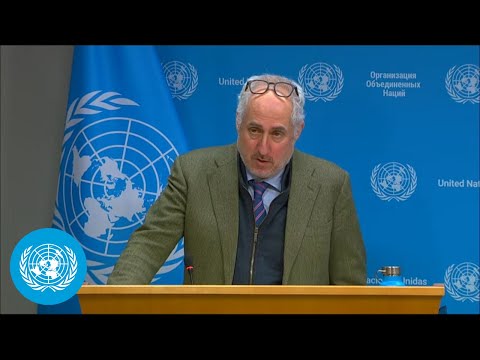
At a United Nations press briefing, the UN spokesperson Steph warned that humanitarian needs across the Middle East are growing faster than aid can reach people, as closed crossings, damaged supply routes and regional escalation constrain operations.
Steph said that the Israeli authorities reopened the Kerem Shalom crossing this week, allowing the UN to bring in about "570,000 liters of diesel fuel" and other critical items into Gaza, but that other crossing points, including Rafah, remain closed and limit staff rotations and deliveries. "Safe, sustained and unimpeded access is vital for our operations and all our humanitarian partners to carry out their life‑saving work," she said.
The spokesperson reported nearly 70 explosive‑hazard assessments by mine‑action teams across Gaza to support debris management and described dire conditions at displacement sites: an assessment of nearly 1,000 sites found only about 11% have communal lighting and more than half showed open sewage. The UN and partners distributed education supplies to roughly a dozen temporary learning centers to serve tens of thousands of school‑aged children.
Steph warned that disruptions to airspace and transportation corridors are affecting the movement of humanitarian supplies, personnel and commercial goods and could have broader implications for the availability and cost of essential food, fuel and medical supplies. Asked about energy supplies, she said rising fuel prices have a direct impact on UN operations and humanitarian responses because the world remains heavily dependent on fossil fuels.
Turning to Lebanon, the spokesperson described "spillover of the current regional conflict," citing bombardments and an evacuation order for areas south of the Litani River and parts of southern Beirut that have generated mass displacement. She cited a Lebanese Ministry of Public Health figure of "70 fatalities and over 435 injuries" since the escalation began, and described more than 95,000 people sheltering in over 440 collective shelters; partners had distributed hot meals, bedding, solar lamps and hygiene kits.
On UNIFIL operations, Steph said the mission has observed rocket fire and Israeli Defense Forces units inside Lebanese territory in several locations and has aided the transportation of dozens of civilians — including children, older persons and people with disabilities — to safety.
The briefing also covered other humanitarian hotspots: Hans Grundberg, the UN special envoy for Yemen, is engaging regional and international actors to prevent Yemen from being dragged into wider confrontation and to preserve a fragile opportunity for a UN‑led political process. In Sudan, the UN warned of intensified fighting in parts of Kordofan, constrained humanitarian access and a reported drone strike on Dilling General Hospital that killed at least four patients.
Steph said the UN continues to monitor population movements elsewhere in the region: UNHCR field estimates indicated about 100,000 people left Tehran during the first two days after recent attacks, though more recent figures were not yet available. Throughout the briefing she reiterated that civilians and civilian infrastructure must be protected in accordance with international law and that humanitarian corridors and crossings must be opened so assistance can reach people in need.
The spokesperson said the UN would provide additional staff‑presence breakdowns for Gulf states on request and that the Secretary‑General continues to engage regional leaders and Gulf Cooperation Council representatives to reduce tensions.
The briefing ended with the UN marking the International Day for Disarmament and Non‑Proliferation Awareness and a call from the Secretary‑General to invest in "the architecture of peace and not the tools of war."