Get email alerts on the Artificial Intelligence topic
No spam. Unsubscribe anytime.
MSAD 15 discusses district AI guidelines; board splits on generative‑AI uses
Summary
The board reviewed draft preK–12 AI guidelines proposing a stoplight approach (green/yellow/red), data‑privacy checks and phased professional development. Members broadly supported guardrails but some — including one board member — urged prohibition of generative AI in schools.
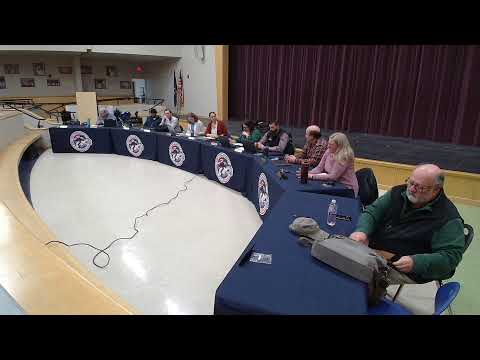
MSAD 15 school leaders presented a draft set of preK–12 artificial‑intelligence guidelines on Feb. 25, outlining a stoplight system for classroom use and a tech‑approval flow for staff tools, and the board discussed ethical, operational and policy questions at length.
Curriculum lead Kathy (presenting) said the guidelines were the product of a committee that included prek–12 staff, technology specialists and teachers. The draft frames AI as a tool that can support the learning process — for example to generate ideas or provide rubric‑aligned feedback — while preserving teacher responsibility for final grading and student accountability for original work. Kathy summarized the proposed "green, yellow, red" matrix: green = allowed with citation, yellow = allowed with permission and guardrails, red = prohibited.
Board members welcomed the stoplight model but differed on how strictly to restrict generative AI. Sam said he opposed any generative‑AI assignments and described large‑language models trained on copyrighted material as ethically unacceptable: "I do not think generative AI should be used in our schools," he said. Other members said generative tools may have limited, supervised uses but stressed the need for transparency, adult oversight and robust professional development.
Administrators emphasized data privacy and the existing technology‑approval process: apps must go through the district tech review and administrators can disable tools if they introduce unforeseen academic integrity risks. The district intends to pilot the stoplight approach, survey staff for training needs and collect parent and student feedback before embedding guidelines in handbooks.
Several trustees pressed whether the board needs a formal policy or should retain a flexible guideline in handbooks; administrators said a guideline lets the district adapt quickly as tools change, while core device‑use and ethical limits remain in policy. The board also discussed grading automation and clarifying that any automated processes that materially affect transcripts must involve human oversight.
Next steps: the district will roll out staff professional development, survey staff and students, continue parent engagement, and return the guidelines to the curriculum committee after an initial pilot and PD phase.
AI generated
The text on this page is AI generated. Summaries, highlights, analysis, and video transcripts are all produced from the original source material.
AI can make mistakes, so if you spot one, and we will fix it for everyone.
Note: the source content is unaltered by us. Any content source we link to, be it a video, an audio recording, or a document, is presented exactly as its publisher released it. That publisher is usually a government body, sometimes an individual official or another organisation.